ChatGPT Advertising for Law Firms Brings New Options for Paid Client Acquisition
Posted on Friday, September 18th, 2026 at 6:53 pm
ChatGPT advertising gives law firms another way to reach prospective clients as they research legal questions and explore their options. Unlike traditional search advertising, which primarily responds to keywords entered into a search engine, ChatGPT ads can appear alongside conversations that indicate interest in a relevant product or service.
For attorneys considering this advertising channel, the biggest questions concern cost, lead quality, and whether the platform can compete with established options such as Google Ads and Local Services Ads.
Understanding how the platform operates, how campaigns are measured, and what legal advertisers need to know can help firms determine whether ChatGPT ads deserve a place in their marketing budgets.
How ChatGPT Advertising Works for Legal Marketers
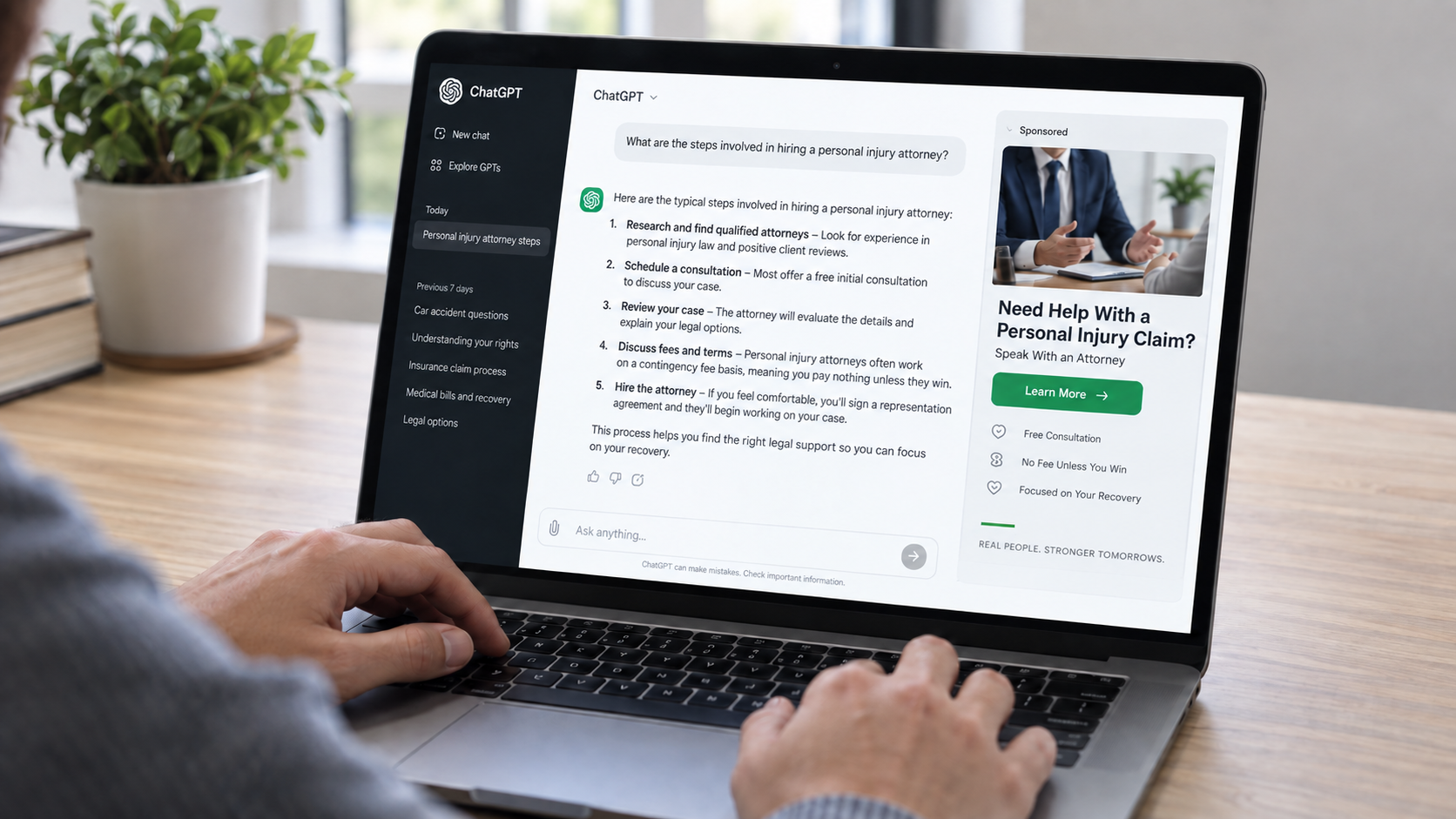
ChatGPT advertising introduces paid placements within the conversational experience. Sponsored advertisements can appear below ChatGPT responses when the platform identifies a relevant advertising opportunity based on the conversation and available targeting criteria.
Ads are labeled as sponsored content and remain separate from ChatGPT’s answers. Advertisers cannot purchase placement within the organic response or control the information ChatGPT provides to users.
For example, someone asking ChatGPT about the steps involved in hiring a personal injury attorney could encounter a relevant legal advertisement. Whether an ad actually appears depends on the platform’s advertising criteria, available campaigns, and other placement factors.
This creates a different advertising environment from the platforms attorneys may already use.
How ChatGPT Ads Compare With Facebook Ads and Google Local Services Ads
Facebook advertising allows firms to reach audiences through social media placements, using available audience targeting options and campaign objectives. These advertisements generally appear while users browse content rather than actively search for legal assistance.
Google Local Services Ads place eligible attorneys in sponsored results associated with relevant local searches. The format is designed to connect prospective clients with service providers through calls and messages.
ChatGPT advertising operates within a conversational setting. Advertisers can provide contextual targeting information describing the topics, keywords, and conversations relevant to their campaigns. These inputs help the platform determine when an advertisement may be appropriate, although advertisers cannot guarantee placement for a specific question.
A law firm might develop a campaign around conversations involving car accident injuries, insurance disputes, or questions about hiring an attorney. The ad’s appearance would depend on the context of the conversation and the platform’s placement process.
Campaign setup shares familiar elements with other paid advertising platforms, including creative development, targeting selections, budgets, and performance measurement. However, the conversational format introduces differences that attorneys should understand before allocating advertising dollars.
Comparing ChatGPT Advertising Costs With Google Ads
Advertising costs are an important consideration for law firms, particularly in competitive practice areas where acquiring a new client can require substantial marketing investment.
ChatGPT advertising supports different campaign objectives and billing methods, including cost per click and cost per thousand impressions. Advertisers can establish budgets and bids based on their campaign objectives, with actual advertising costs determined by auction conditions and campaign performance.
Google Ads also uses auction-based pricing, but the two platforms offer different advertising environments. Google Search campaigns can target specific search queries associated with legal services, while ChatGPT advertising uses conversational context to identify relevant placement opportunities.
These differences make direct cost comparisons more complicated than simply examining the price of an individual click.
What TSEG Has Found Through Early ChatGPT Advertising Tests
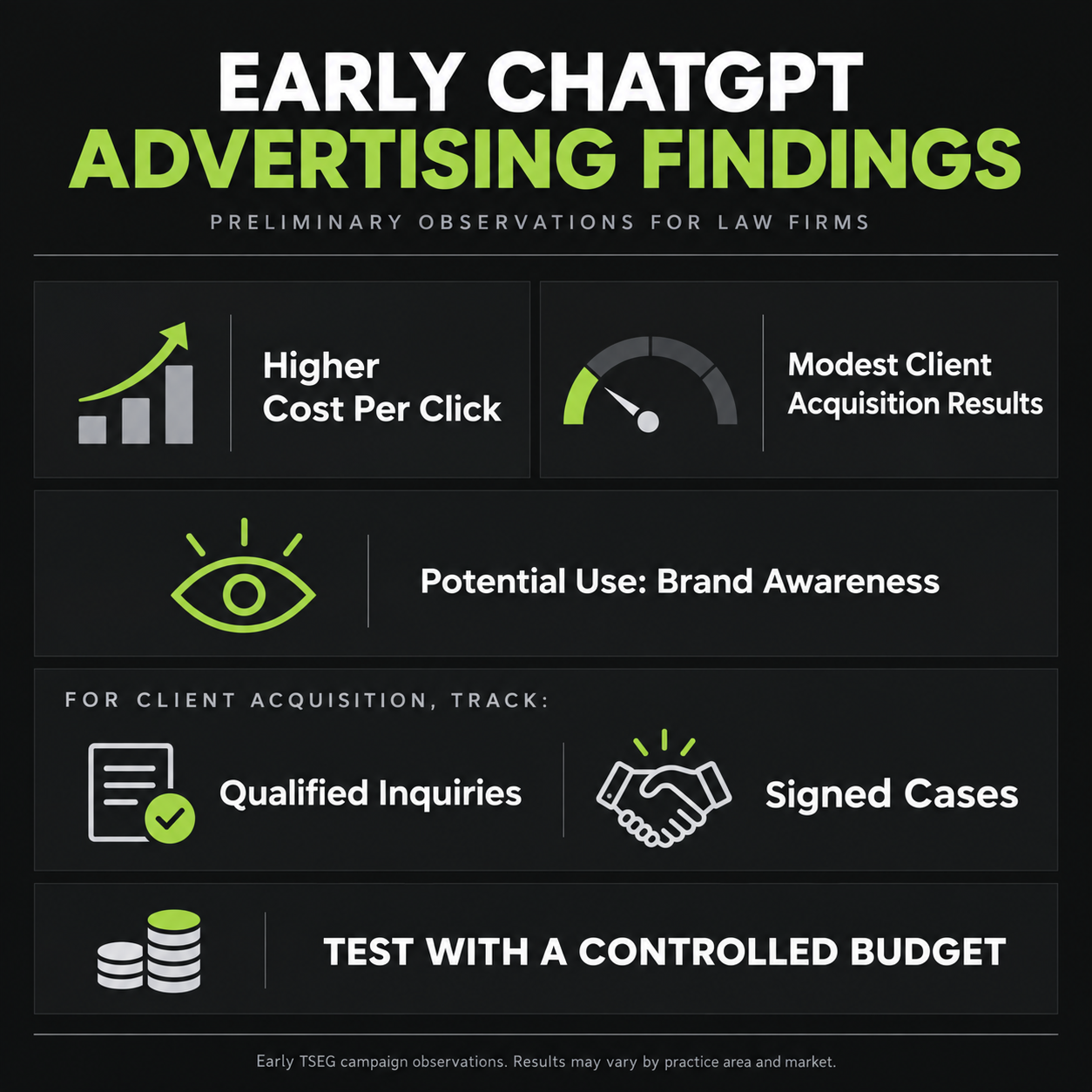
Our initial testing indicates that ChatGPT advertising for legal services can be considerably more expensive on a cost per click basis than other advertising platforms.
We have also observed modest results compared with established advertising channels. Although the platform introduces another opportunity to reach prospective clients, our early testing has not demonstrated that it can consistently match the client acquisition performance of more established options.
These findings reflect TSEG’s initial campaigns and should not be interpreted as universal benchmarks for every practice area or geographic market.
One area where ChatGPT advertising may warrant consideration is brand awareness. Firms primarily interested in generating impressions and introducing their brands to relevant audiences may evaluate the platform differently from firms focused exclusively on immediate lead generation.
For campaigns intended to acquire new clients, attorneys should examine how much they spend to generate qualified inquiries and signed cases rather than relying on impression totals alone.
A controlled testing budget allows firms to gather performance data without committing a substantial portion of their advertising investment to an unproven channel.
TSEG continues to test emerging advertising platforms and revisit existing platforms when new features or major updates create opportunities to improve campaign performance.
Measuring Leads and Client Acquisition From ChatGPT Ads
Tracking campaign results requires more than reviewing the number of people who see or click an advertisement.
For law firms, meaningful performance measurement should connect advertising spend with inquiries, qualified leads, consultations, and signed cases.
ChatGPT advertising supports conversion measurement through tracking tools such as the OpenAI pixel and Conversions API. Advertisers can also use tracking parameters to identify campaign traffic in external analytics platforms.
How ChatGPT Advertising Attribution Works in Google Analytics
When someone clicks a ChatGPT advertisement, tracking parameters can accompany the visitor to the law firm’s website.
UTM parameters can identify the traffic source, advertising medium, and campaign. Google Analytics 4 can then use this information to associate website activity with the advertising campaign.
For example, a visitor might click a ChatGPT advertisement, arrive on a personal injury landing page, and complete a consultation request form.
With the appropriate configuration, Google Analytics can record the session and associated conversion event.
However, a recorded conversion does not necessarily represent a qualified lead or a retained client. Law firms should also evaluate their intake and case management records to determine whether advertising inquiries become consultations and signed cases.
Several performance metrics help establish a clearer picture of campaign results.
- Cost per click measures the average amount spent to generate an advertisement click.
- Cost per lead measures advertising spend relative to the number of inquiries received.
- Cost per qualified lead accounts for whether inquiries meet the firm’s intake criteria.
- Cost per signed case connects advertising investment with actual client acquisition.
A campaign generating inexpensive inquiries may ultimately cost more per signed case if those inquiries rarely become clients. A campaign with higher click costs may produce better business results if its leads consistently turn into retained clients.
Reviewing these metrics together helps law firms determine whether ChatGPT advertising is generating meaningful returns and how its performance compares with their existing marketing channels.
Attorney Advertising Rules and Client Privacy Considerations
Law firms considering ChatGPT advertising must account for professional advertising requirements, client confidentiality, and the platform’s own policies.
Attorney advertising rules vary by jurisdiction. Firms should review the requirements applicable to their practice, including restrictions concerning misleading statements, claims about results, testimonials, and required advertising disclosures.
The American Bar Association’s Model Rules of Professional Conduct provide a starting point, although individual state rules govern the obligations of attorneys practicing in those jurisdictions.
Advertisements should accurately represent the firm’s services and avoid creating unjustified expectations about potential case outcomes.
Business Verification and Agency Account Access
ChatGPT advertising also introduces account setup requirements that law firms and their marketing agencies need to understand.
Under OpenAI’s documented self-service onboarding process, the advertiser establishes its own account and completes the required business verification and review procedures.
An agency cannot independently create the advertiser account on the client’s behalf through that process. Once the law firm has established its account, it can invite its marketing agency to access and manage advertising activities.
Firms should confirm current account eligibility, advertising policies, and any additional requirements that apply to legal services before attempting to launch a campaign.
Law firms should also review how their advertising and conversion tracking configurations handle information submitted by prospective clients. Marketing measurement should be implemented in a manner consistent with applicable privacy requirements and professional confidentiality obligations.
Addressing these requirements during account setup can help attorneys establish appropriate oversight before their campaigns begin.
How TSEG Can Help Your Firm Evaluate ChatGPT Advertising
ChatGPT advertising offers law firms an additional paid marketing channel, but early performance data suggests that careful testing is necessary before making a substantial investment.
At TSEG, we are actively evaluating ChatGPT advertising alongside established platforms to understand where it can contribute to legal marketing campaigns. Our initial testing has revealed higher click costs and modest lead generation results, reinforcing the importance of comparing new advertising opportunities against the channels already producing signed cases.
We also recognize that AI is changing how prospective clients discover and research attorneys. Our SEO services are expanding to address AI search platforms, while our proprietary TSEG Lawgic system supports our broader marketing efforts through campaign analysis, performance measurement, and optimization.
If your firm is interested in advertising on ChatGPT, contact TSEG for a free consultation. Our team can review your current marketing strategy, discuss our testing experience, and help you determine how to approach a ChatGPT advertising campaign based on your firm’s goals and budget.


