Google Search Console Block Flattening Changes How Law Firms Should Read Search Performance
Posted on Friday, September 25th, 2026 at 9:51 pm

What Block Flattening Means for Legal Marketers
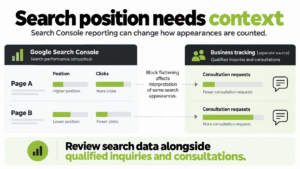
Google Search Console reporting can influence how law firms interpret organic search performance. Block flattening changes how certain search result elements are represented in reporting, which can affect the way marketers interpret position data and assess individual search appearances.
For law firms, this makes context increasingly important when reviewing Search Console reports. Position data can help identify trends, but it should be considered alongside clicks, inquiries, consultation requests, and other actions connected with business development.
A page ranking for a valuable legal query may attract traffic without producing qualified leads. Another page may receive fewer clicks while generating more consultation requests. Evaluating both search data and business results gives firms a clearer picture of which content contributes to client acquisition.
Look Beyond Average Position
Average position has long been one of the most recognizable metrics in Search Console, but it does not provide a complete account of a page’s performance.
Legal marketers can pair Search Console data with website analytics and lead tracking to understand what happens after someone reaches the site. Click through rates, landing page engagement, form submissions, phone calls, and booked consultations can provide additional context.
This approach can be particularly useful when evaluating practice area pages and informational content. A blog post may attract substantial search traffic while a narrower practice area page generates fewer visits but more qualified inquiries. Those pages serve different purposes and should be assessed accordingly.
Connect Search Data With Client Acquisition
Law firms can get more value from reporting when search metrics are connected with the actions prospective clients take.
Rather than treating every increase or decrease in average position as a standalone event, marketers can examine whether changes correspond with traffic quality and lead activity. This can help determine whether a page is reaching people whose searches match the firm’s services.
Content analysis can also identify gaps in the client journey. If a page earns clicks but produces few inquiries, marketers can review whether it answers the searcher’s question, explains the firm’s relevant services, and provides a clear next step.
For attorneys, this type of analysis ties SEO reporting more closely to the business purpose of the website.
Account for AI Search When Planning Legal Content
Search behavior is also being affected by AI generated answers and other search features that can give users information before they visit a law firm’s website. Legal marketers should account for these experiences when planning and evaluating content.
Pages can be developed around the detailed questions prospective clients ask during the research process. Practice area content can explain legal processes, common concerns, possible next steps, and the circumstances in which someone may consider speaking with an attorney.
Search Console data can then help marketers identify the queries associated with those pages and how users interact with them in Google Search. Combined with analytics and lead data, this information can guide future content decisions without relying on rankings alone.
Build Reporting Around Meaningful Legal Marketing Results
Changes in Search Console reporting are a reminder that individual SEO metrics should be interpreted within a broader measurement framework. Law firms can review search performance alongside website behavior and qualified lead activity to determine which pages contribute to marketing goals.
At TSEG, we help law firms connect search data with the outcomes that matter to their practices. We can evaluate Search Console performance, identify opportunities across legal content, assess how organic traffic contributes to qualified inquiries, and develop SEO strategies around measurable client acquisition goals. As Google Search and AI powered search experiences continue to affect how prospective clients find legal information, we help firms turn search data into practical marketing decisions.


