Two AI Search Experiments Reveal How Online Associations Influence Law Firm Recognition
Posted on Wednesday, September 16th, 2026 at 10:42 pm
Why Your Firm’s Online Associations Matter in AI Search
SEO and AI search consultant Zeeshan Yaseen explored the relationships between content on your firm’s website and content on third-party websites through two experiments involving different brands. His research suggests that online associations deserve closer attention from businesses developing their AI search strategies.
His research didn’t actually involve law firms, but the findings offer practical considerations for trial attorneys seeking to understand how AI platforms discover and recommend legal professionals.
The Publications Mentioning Your Firm Influences AI Citations
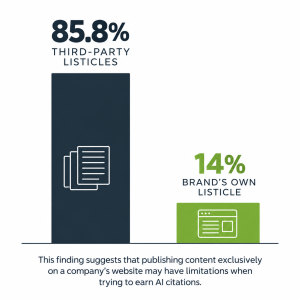 In the experiments, third-party listicles (articles centered around lists) accounted for 85.8% of source mentions, while the brand’s own listicle generated approximately 14%. So law firms may have trouble earning AI citations by self-promoting on their own listicles.
Trial attorneys should examine which external websites AI platforms reference most commonly when answering questions about legal representation. Reputable legal publications, professional directories, and articles on attorneys in specific practice areas may offer relevant opportunities.
Stop pursuing placements based on traditional SEO metrics, firms need to investigate whether AI platforms already cite those publications for searches related to their services.
Appearing Alongside Experts & Competitors Strengthens AI Associations
Yaseen’s experiments also examined how the names appearing alongside a business affected its presence in AI-generated answers.
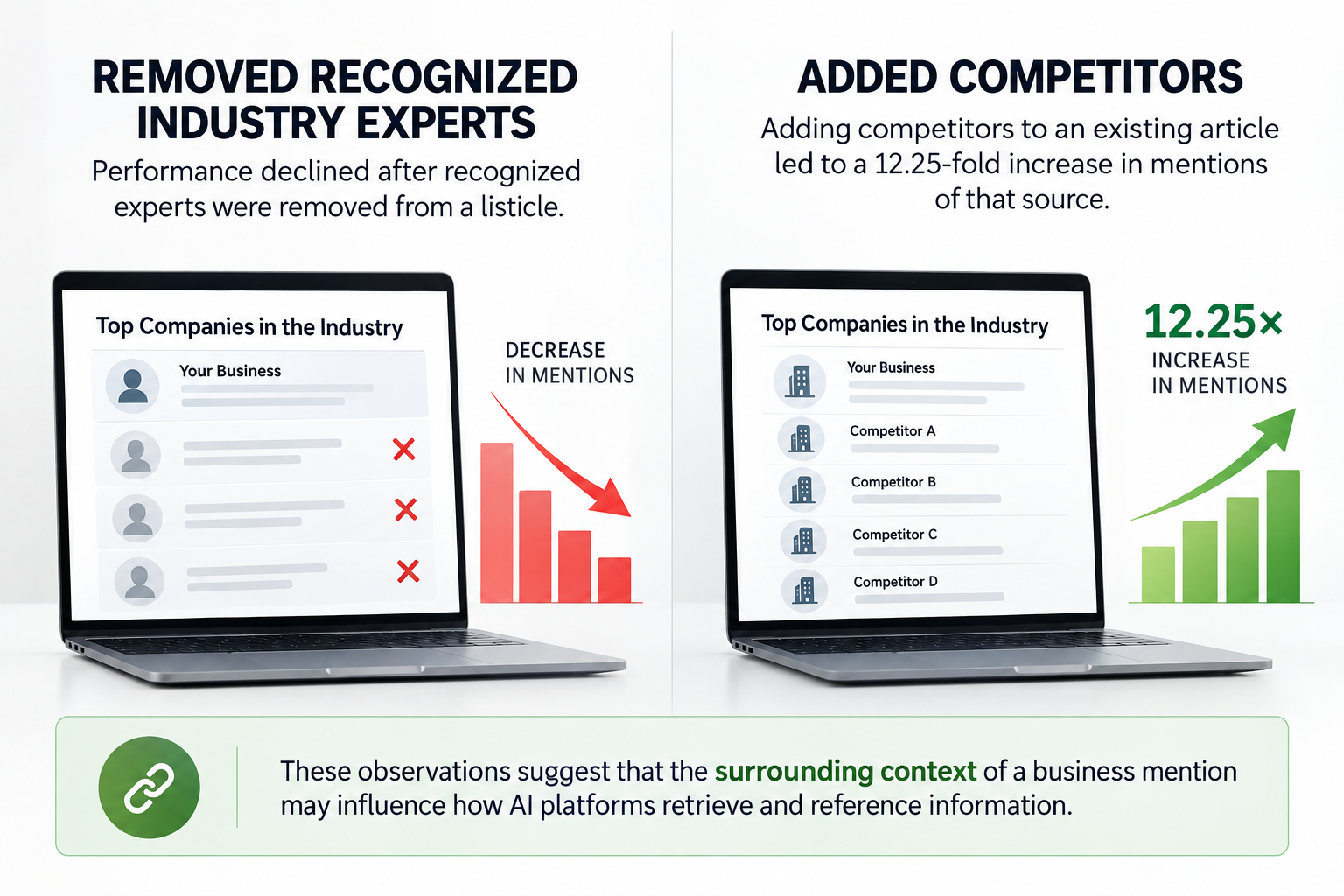
In one experiment, removing recognized industry experts from a listicle was followed by a decline in performance. In another, adding competitors to an existing article was followed by a 12.25X increase in mentions of that source.
These observations suggest that the surrounding context of a business mention may influence how AI platforms retrieve and reference information.
For trial attorneys, this raises the potential value of appearing in credible legal industry comparisons, contributing to publications alongside established professionals, and earning recognition from relevant legal organizations. Firms should prioritize accurate, independently earned mentions rather than manufacturing associations or making unsupported comparisons.
Recent Mentions Maintain Your Firm’s AI Search Presence
The timing of online associations was another important finding in Yaseen’s research. Roughly half of the sources in his first experiment stopped receiving citations within 30 days. This suggests that earning a single publication mention may not produce lasting results.
Trial attorneys should consider maintaining an active presence through relevant legal commentary, professional contributions, and updates to existing content when new information warrants them. Firms can also monitor whether previously cited publications continue appearing in AI answers. Tracking these changes can help determine which relationships and content opportunities deserve additional attention.
Three Questions Trial Attorneys Should Ask About Their Online Associations
Yaseen’s findings provide a practical framework for examining how a law firm is represented across the web.
Attorneys can begin by testing relevant queries across ChatGPT, Gemini, and Perplexity, then evaluating the sources and names appearing in the responses.
Three questions can guide that evaluation.
1. Which sources mention your firm?
Identify the publications, directories, and third-party websites that reference your attorneys. Determine whether AI platforms cite those sources when answering questions about your practice areas.
2. Who appears alongside your attorneys?
Examine whether your firm appears in relevant articles, comparisons, or professional coverage alongside recognized attorneys and legal organizations. Look for legitimate opportunities to contribute expertise to publications that discuss your practice areas.
3. How recently have those relationships been reinforced?
Review the publication dates of existing mentions and monitor whether older sources continue receiving AI citations. Consider opportunities for new commentary or updated coverage when there is a legitimate reason to publish.
These findings should inform a broader measurement strategy. Yaseen’s research also found that frequently cited sources were not necessarily the strongest sources of referral traffic. Firms should therefore evaluate qualified website visits and potential client inquiries alongside AI mentions.
How TSEG Helps Law Firms Strengthen Their AI Search Presence
Zeeshan Yaseen’s experiments suggest that AI search recognition may depend heavily on a business’s online associations. The sources mentioning a firm, the professionals appearing alongside it, and the recency of those connections may all contribute to whether AI platforms reference that business.
For trial attorneys, these findings provide a reason to examine how their professional reputation is represented beyond their own websites.
At TSEG, we help law firms evaluate their presence across the web, identify relevant third-party publication opportunities, and monitor how they appear in AI-generated answers. By understanding which online associations contribute to AI citations, we can help attorneys make more informed decisions about their search marketing investments. If you need help getting your SEO strategy updated for the modern AI era, reach out to our team today.


