7 Key Metrics Law Firms Can Use To Measure Search Success in 2026
Posted on Tuesday, December 2nd, 2025 at 5:19 pm
Search Has Changed. Your Metrics Need to Catch Up.
Ranking number one on Google used to be the finish line. Now, it is just one piece of a much larger puzzle.
Today, law firms are being evaluated across many different surfaces. A potential client might ask a chatbot for legal guidance, scroll through TikTok videos about recent settlements, and then read peer reviews before ever visiting your site.
People do not search the way they did five years ago. They discover, browse and verify your business outside of your website and away from traditional search results.
This new environment requires a new set of metrics. Visibility is still important, but it needs to be tied to outcomes. Are people reaching your site and contacting your intake team? Are they trusting what they see? Are they coming from more than one source?
The following seven focus areas outline what real search performance looks like in 2026 and how law firms can track the signals that matter most.
1. Visitor Quality: Are You Attracting Leads That Convert?
Traffic alone does not mean your marketing is working. What matters is whether visitors are turning into potential clients.
The right metrics go beyond session counts. You should be tracking how many people fill out intake forms, place phone calls, or engage with live chat. These are the actions that actually move cases forward.
The best way to evaluate this is page by page. A blog post that attracts high traffic but generates no inquiries should be flagged for review. A location or service page that produces fewer visits but drives qualified leads should be prioritized in your strategy.
Start by measuring conversion rates on your top entry pages. Look at call volume, completed forms, and booked consultations. Then tie each lead back to settlement numbers after the case is closed. Identify which parts of your site are attracting strong prospects and which are underperforming.
Pages that bring visits but no meaningful action can be improved. Pages that help bring in signed cases, even with less traffic, should be amplified.
2. SERP Visibility: Are You Showing Up in More Than One Spot?
A single organic ranking does not reflect your full presence in search.
Modern results pages include AI summaries, videos, ‘People Also Ask’ boxes, image packs, and discussions from online forums. These placements influence decisions before someone visits your website.
You should be tracking where your firm appears across these features. Look at how often your content shows up in AI answers, video results, and third-party discussions tied to your key topics.
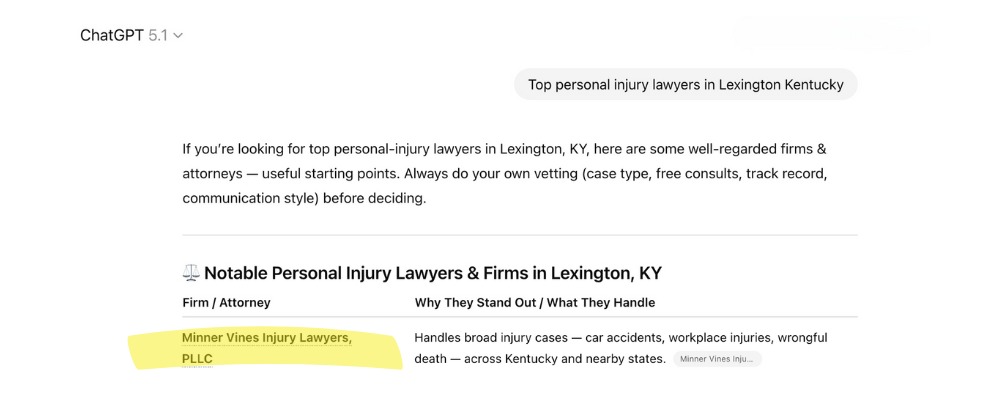
Start with your top keywords. Identify which formats appear and where your content is missing. Then create the assets needed to fill those gaps. This may include short videos, FAQ content, or pages structured to trigger featured placements.
The goal is to appear in more than one format for each high-value search. More placements lead to more visibility, which leads to more trust.
3. Trend Detection: Are You Posting Before the Buzz Hits?
Search interest can grow fast. A new legal issue can go from low volume to high demand in weeks. The firms that respond early are the ones that get found first.
Staying ahead means tracking early signals. Look for rising queries in Search Console, new topics showing up in client calls, or keywords that start appearing in social content. Watch for regulatory changes, product recalls, and lawsuits gaining attention online before they hit mainstream coverage.
Create a short list of topics worth pursuing. Then publish before your competitors do. Speed matters. If it takes months to approve and post content, the opportunity may pass.
Track how long it takes from spotting a trend to going live with a page, article, or video. Faster response times often lead to stronger rankings and higher visibility when interest spikes.
A fast-moving legal trend will not wait. You can either lead the conversation or get buried under those who moved faster.
4. Platform Diversity: Are You Getting Found Beyond Google?
Clients use many platforms to research attorneys. They watch videos, scroll reddit, check reviews, and browse social content before contacting a firm.
You should know which platforms introduce people to your brand. Track referral traffic from YouTube, TikTok, Instagram, Reddit, and major legal review sites. If one source accounts for nearly all discovery, you may be missing audiences that rely on other channels.
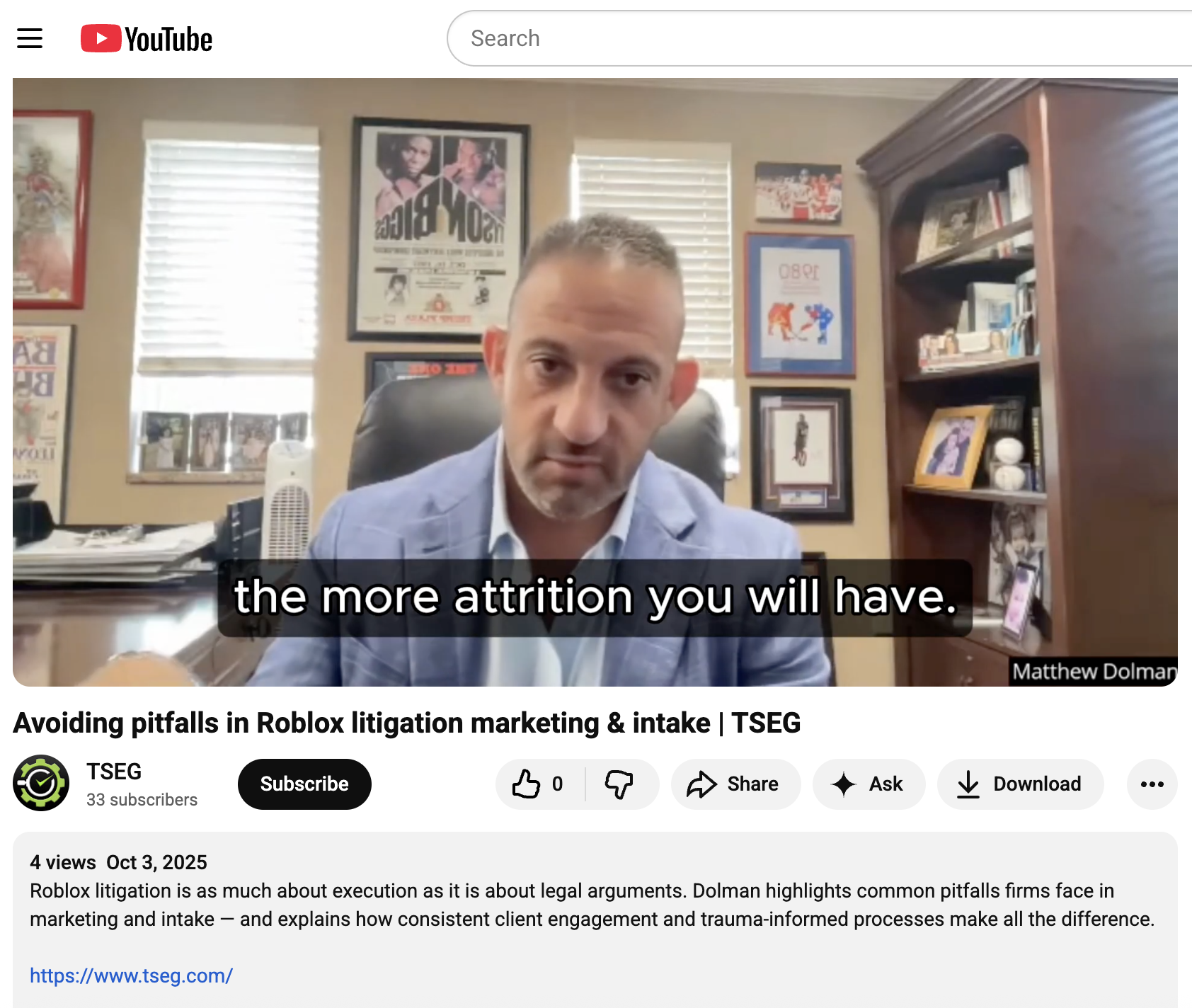
Build content that fits each platform. Short explanations of case types, attorney introductions, and quick answers to common questions perform well on social video. Review profiles should be complete and updated. Forum participation should focus on useful guidance rather than promotion.
Wider platform coverage gives your firm more chances to be seen and trusted.
5. Brand Perception: Do You Look Trustworthy Everywhere You Appear?
People often make decisions before reaching your site. They read reviews, search your name, and compare you to other firms based on what they find across the web.
Track branded search volume, third-party review ratings, and mentions on sites like Avvo, Google, and Trustpilot. Pay attention to how your firm is described and rated in places you do not control.
If your reviews are weak, traffic will not convert. If your ratings improve, conversion rates often rise with them. Trust builds offsite, and it follows people into the decisions they make.
Add strong reviews and testimonials to your top-performing pages. Monitor your review footprint the same way you track rankings. If people like what they read, they are more likely to call.

6. Paid and Organic: Are They Working Together or Competing?
Organic content supports paid campaigns when both are built around the same goals. Pages that rank well often convert better, which lowers acquisition costs in paid search.
Use organic SEO insights to improve paid media performance. High-performing headlines, calls to action, and landing page structures should be shared across teams. Landing pages built for organic traffic can also improve quality scores and reduce cost per click when used in campaigns.
Track results from paid traffic that lands on optimized SEO pages. Compare conversion rates, return on ad spend, and cost per lead against pages that were built only for paid traffic. You will likely discover some patterns.
Your firm can lower ad costs and improve lead quality by connecting the two efforts. Treat paid and organic as parts of the same strategy.
7. Total Search Performance: Is Search Driving Revenue, Or Just Rankings?
Marketing teams often separate paid and organic performance. That split can hide what really matters. You need to know how search is contributing to signed cases.
Group queries by topic or case type. Measure total traffic, conversion rates, and revenue from both paid and organic sources. This gives you a complete view of how well search is supporting client growth.
If ad budgets are being used on topics where organic content is weak, that should guide your SEO priorities. If organic content already brings in strong leads, paid campaigns can help extend that success without overspending.
Track how much revenue search drives as a channel. That is what leadership teams care about.
TSEG Helps Law Firms Compete Where It Counts
Rankings still matter, but they no longer tell the whole story. Real success comes from traffic that converts, content that reaches across platforms, and visibility that builds trust at every stage of the search.
TSEG works with law firms to build search strategies that reflect how clients actually discover and choose attorneys. We help firms improve performance across organic, paid, and platform-specific channels. Our approach is built on measurable outcomes, not assumptions.
If your current reporting stops at keyword rankings, it is time to upgrade your strategy. TSEG can show you what real success looks like and help you get there faster. Contact us today.


