How are law firms “ranking” in AI search?
Posted on Wednesday, February 18th, 2026 at 11:01 pm
When Rankings Stop Being the Deciding Factor
Trial lawyers have spent years competing for page one positions. That benchmark is losing influence as prospective clients turn to AI platforms for answers to specific legal questions.
Recent large scale testing of identical prompts across major AI systems revealed substantial variation in named outcomes. For example, the same question about the top car accident attorney in a city yielded different answers across platforms. Yet a small subset of firms appeared repeatedly across systems and across related prompts.
That pattern reveals a measurable trend. Visibility within AI responses is becoming a more reliable indicator of digital authority than traditional search placement alone.
Why AI Platforms Produce Different Firm Lists
AI tools do not pull from a fixed ranking page. They generate answers based on probability models informed by training data and referenced sources. Each response reflects how confidently the system associates a firm with a specific practice area and geography.
If that association is clear and reinforced across multiple trusted sources, the likelihood of mention increases. If the firm’s information is inconsistent, fragmented, or weakly corroborated, the likelihood declines.
Tracking frequency across high intent legal queries provides a clearer picture of influence than focusing on whether a firm appears first within a single output.
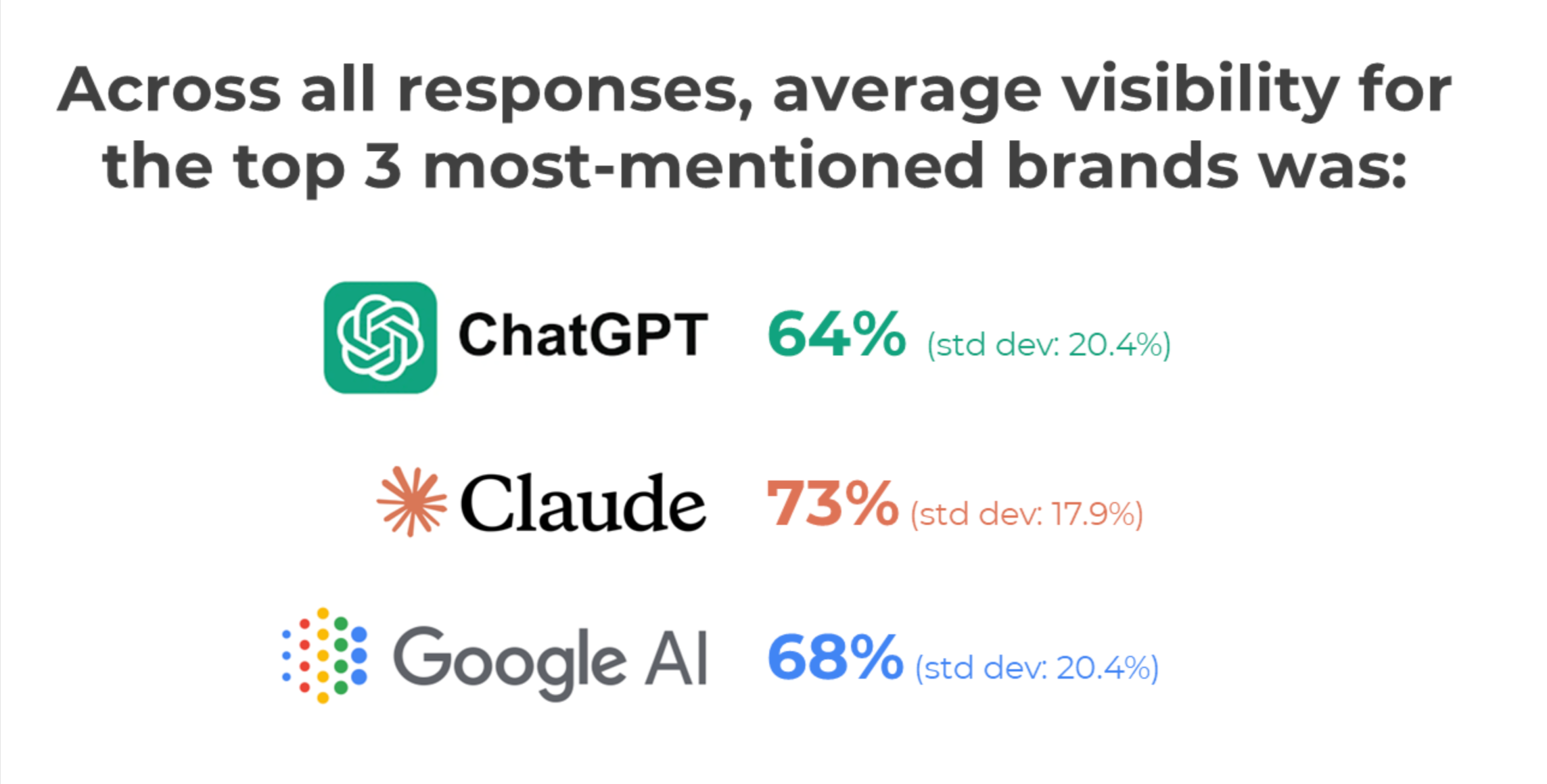
Source: SparkToro
Clear Entity Definition Determines Recognition
Before a firm is named in an AI answer, it must be interpreted as a defined legal entity. That interpretation depends on consistent descriptions, accurate structured data, complete attorney biographies, and alignment across directories and industry publications.
Conflicting addresses, inconsistent practice descriptions, or outdated attorney information create ambiguity. Ambiguity reduces confidence in the association between the firm and a specific case type.
Clean architecture and consistent positioning across authoritative sources increase recognition. When the system encounters the same description repeatedly in credible environments, confidence strengthens.
Independent Validation Increases Inclusion Rates
Claims made on a firm’s own website carry limited weight when unsupported elsewhere. Recognition from established legal publications, respected directories, and authoritative databases reinforces credibility.
When multiple independent sources describe a firm using similar language tied to specific practice areas, that alignment reinforces topical authority. In testing, firms with broader third-party validation appeared more frequently across complex injury and litigation-related prompts.
Authority supported externally tends to be reflected internally in AI outputs.
Authority Compounds With Repetition
Firms that appear repeatedly in answers about trucking accidents, medical malpractice, or catastrophic injury begin to form a reinforced association with those case types. Over time, that association increases the probability of continued mention.
In competitive plaintiff markets, early investment in clear positioning and independent validation creates cumulative advantages. Firms that wait to address entity clarity often struggle to gain consistent recognition once competitors have established dominance across trusted sources.
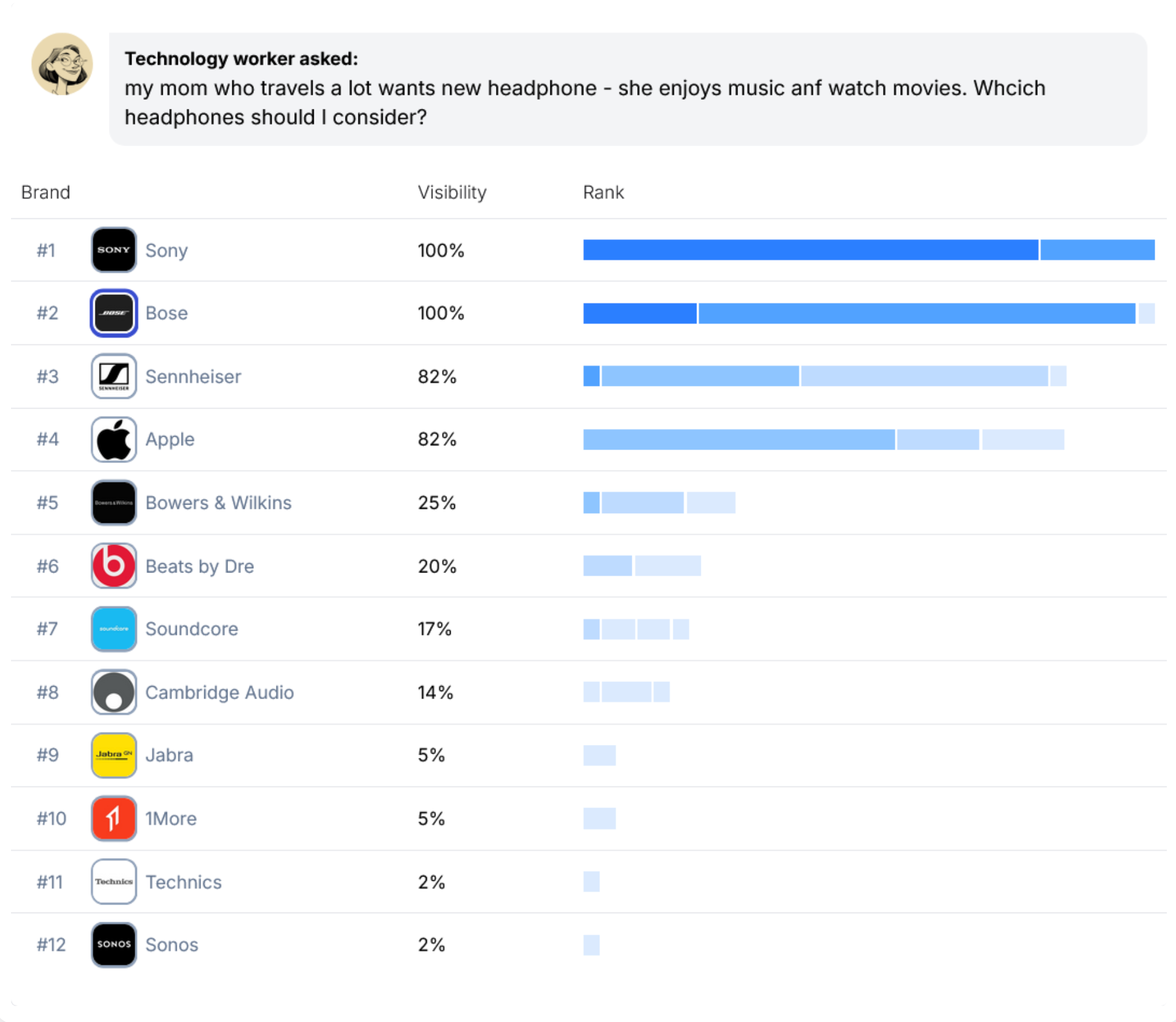
Example from Gumshoe
Mistakes That Limit AI Recognition
Monitoring AI answers without correcting underlying data inconsistencies produces limited gains. Editing website copy alone will not resolve structural misalignment across directories or industry listings.
AI platforms evaluate the broader digital footprint. That includes structured data accuracy, publication mentions, directory consistency, and attorney level credibility signals. Without coordination across these elements, inclusion remains inconsistent.
Surface adjustments do not compensate for foundational gaps.
How TSEG Builds Durable AI Authority for Plaintiff Firms
At TSEG, we focus on building and strengthening our partner law firms’ digital entities with precision. We align structured data, correct inconsistencies across authoritative platforms, and secure meaningful third party validation that reinforces their standing in the country’s most competitive markets. Our work ensures AI systems interpret their reputations accurately and repeatedly associate their firm with the case types they want to attract.
As AI mediated search continues to influence intake decisions, we help trial firms position themselves for sustained visibility and higher value case acquisition. For a quick briefing on how your firm is performing in AI search, reach out today.


