Ask.com Shuts Down After 25 Years and what this means for Legal Search
Posted on Wednesday, May 6th, 2026 at 7:14 pm

Search Engine Built Around Asking Questions Says Goodbye
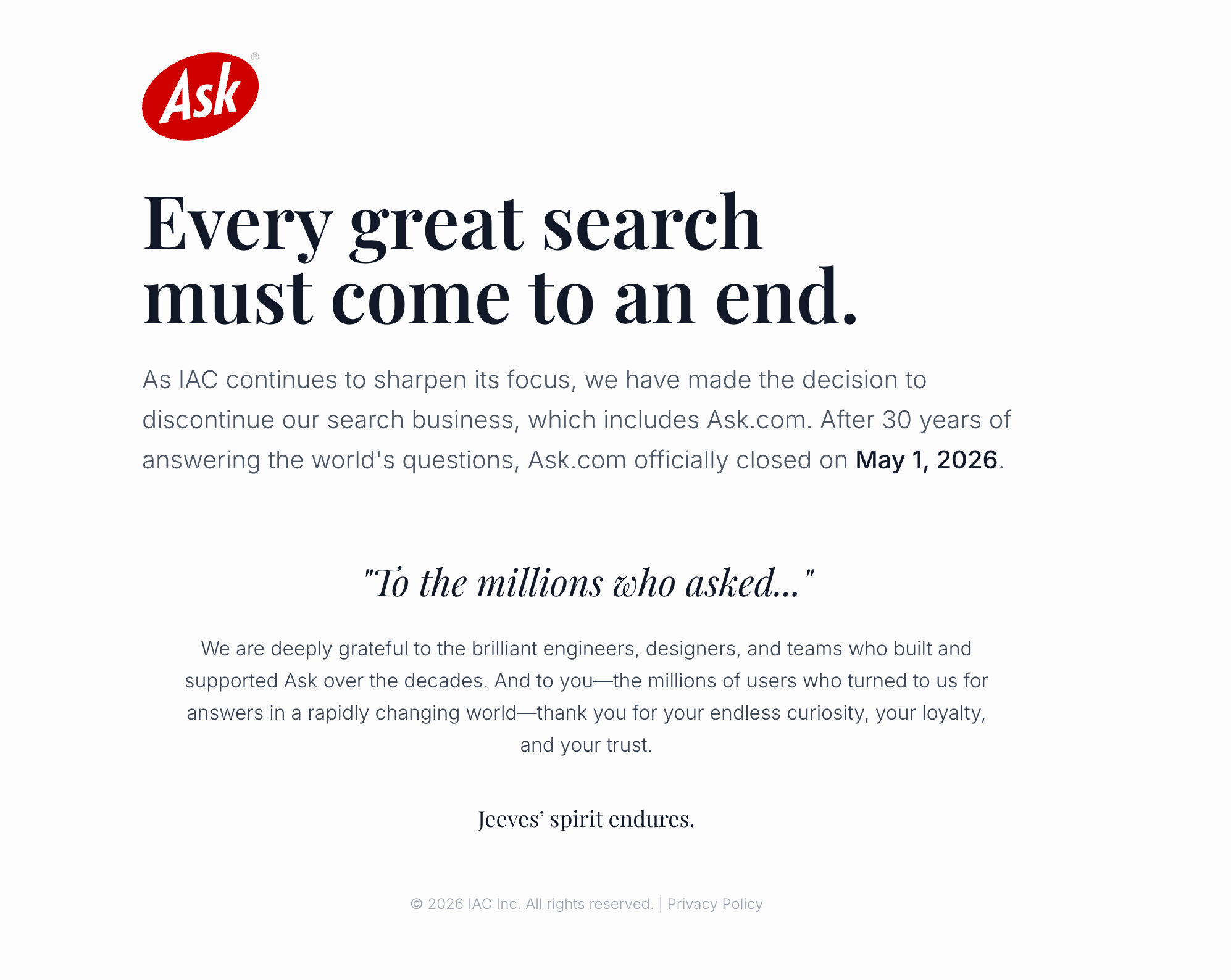
Ask.com officially shut down on May 1, 2026, ending a search engine run that began in 1996 as Ask Jeeves. Long before AI chatbots became common, the platform encouraged users to type complete questions instead of short keyword searches. Its butler mascot, Jeeves, became one of the internet’s earliest recognizable search brands.
Parent Company IAC said it decided to discontinue the search business as part of a broader corporate focus. While Ask.com never matched competitors like Google in size, it helped shape the conversational search habits now driving modern AI answer tools.
Though most law firms aren’t targeting Ask.com in their SEO strategies, it’s important to realize the magnitude of how much AI is changing the search industry. Many attorneys knew about Ask Jeeves before they heard about Google and Yahoo, and its failure to adapt has turned it to a relic of the past.
How Ask Jeeves Changed Online Search Habits
Before autocomplete and AI assistants became part of everyday life, Ask Jeeves pushed users to search differently. Instead of typing disconnected keywords, people were encouraged to type questions using natural language, sparking the long-tail keyword strategies many law firms implemented in their PPC campaigns.
That approach felt unusual during the early years of search, but it closely mirrors how users interact with voice search and AI answer platforms today. People now expect assistant-like (or butler) direct responses and condensed information instead of scrolling through pages of links.
Why This Closure Matters to Search Marketing
Ask.com’s shutdown reflects how competitive search has become as AI companies race to deliver faster answers and more personalized results. Traditional search engines are under pressure as users spend less time clicking through multiple websites. Law firms now compete for placement inside AI search results instead of only traditional rankings.
As we’ve repeatedly stated in our blog, firms that publish clear, informative content have a stronger chance of appearing more prominently in AI search features. Reliable legal information continues performing well as online search tools evolve.
Law Firm Content Needs to Match How People Ask
Potential clients rarely search using legal terminology alone. Most people search using questions tied to their situation, concerns, or next steps after an accident or injury. Law firm websites perform better when content reflects those searches through clear headlines, useful FAQs, and reliable content. Pages written in plain language are also more likely to align with the natural language patterns used in AI search tools.
As summarized search results become more common, firms with strong legal content are more likely to reach potential clients online.
The Post-Jeeves Takeaway
Ask.com may be gone, but the search habits it introduced still influence how users find information today. Users want fast information, and search engines now prioritize condensed responses and direct explanations. Website content now plays a larger role in how law firms engage potential clients online. Firms need pages that build trust quickly and support stronger digital performance.
At TSEG, we help law firms improve digital visibility through content strategies tailored to modern search tools and the way potential clients research legal services online. Reach out today to see how your firm can get ahead.


