Google DMCA Takedown Surge Creates New Search Risk for Law Firms
Posted on Friday, July 10th, 2026 at 2:36 pm
Google’s Removal System Is Under Heavy Pressure
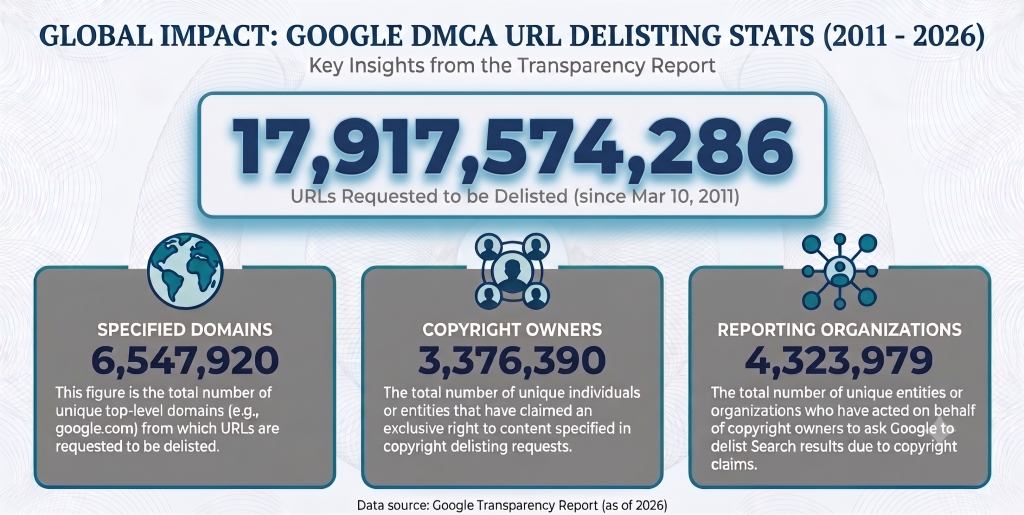
Google is now receiving an enormous volume of copyright removal requests for search results. These Digital Millennium Copyright Act (DMCA) reports are a feature added by Google intended to help people protect their copyrighted material, but it is severely being misused by bad actors in the digital marketing space. Many of these requests move through automated review systems because Google’s manual review simply cannot keep pace with the volume. That helps Google respond more quickly, but it also increases the chance that legitimate pages may be removed by mistake.
Law firms should pay attention because high value, organic traffic often depends on a small group of strong pages. A practice area page, legal guide, case type resource, or blog post can bring in valuable visitors month after month. When one of those pages disappears from search results, the drop can affect intake before the firm understands what happened.
The risk is not limited to firms that publish copyrighted material from other sources. Original legal content can still be caught in a mistaken claim, especially when similar topics are covered across many competing sites. Attorneys who treat organic search as a steady channel may need a stronger plan for sudden removals.
Wrongful Takedowns Can Interrupt Intake
A law firm page does not need to be permanently removed to cause harm. Even a temporary removal can reduce traffic during an active campaign. If a page about truck accident claims, birth injury lawsuits, or a mass tort topic disappears from search for several days, the firm may lose leads that would have come through that content.
These issues can also make reporting harder. A sudden drop may look like an algorithm change, a tracking issue, or a decline in demand. Without a review process, teams can spend days checking rankings and analytics before realizing the page was removed due to a copyright claim.
The impact can spread beyond one URL. A missing page can affect internal linking, reduce user paths to conversion pages, and disrupt content plans that were built around that asset. Firms that invest in legal content should treat each strong page as something worth monitoring and defending.
False Claims Are Becoming a Search Competition Problem
The DMCA process was created to help rights holders protect their work. The same process can be misused when someone files a weak or misleading claim against a competitor. In legal search markets, that kind of abuse can be especially damaging because a single ranking page may support a steady flow of consultations.
Personal injury, mass tort, and other competitive practice areas are more exposed because the financial value of a strong ranking is high. A wrongful claim against a car accident guide or a product liability resource can remove a competitor from search while the claim is reviewed. Even when the page comes back, the firm may have already lost leads.
Law firms with intellectual property, media, or business litigation experience may also see client demand in this area. Businesses outside the legal industry are dealing with similar takedown problems. Attorneys who understand copyright disputes, search systems, and online reputation issues can help clients respond when valid pages are removed.
Automation Creates Repeated Errors
Google relies on automated review because the number of requests is too large for manual handling alone. Automation can process claims quickly, but it can also repeat the same mistake across many pages. If a flawed claim targets similar language, copied snippets, syndicated content, or scraped material, valid law firm pages may be affected.
Search teams should not assume that a drop will fix itself. A page that loses traffic may have been removed from search results, excluded from indexing, or affected by a copyright complaint. Each possibility requires a different response.
A stronger process starts with routine checks. Firms should track which pages are indexed, which URLs bring in organic leads, and which assets are tied to active campaigns. When something changes, the team should be able to compare traffic, rankings, Search Console data, and page status effectively.
How Law Firms Can Reduce DMCA-Related Damage
Law firms can lower their exposure by keeping better records of their content. Draft dates, publication dates, author notes, source files, and revision history can help prove ownership when a page is challenged. This documentation matters most for high-value pages that drive calls, form fills, or signed cases.
Regular index audits are also important. A monthly review may not be enough for firms in competitive markets. Pages tied to major case types should be checked more often, especially during large content campaigns or periods of increased search activity around a mass tort.
Firms also need a clear response process. The team should know who reviews a takedown notice, who prepares documentation, who contacts search support channels, and when legal counsel should be involved. A counter notice should not be improvised under pressure.
It also helps to reduce dependence on one traffic source. Organic search may remain a major source of intake, but firms should also build direct traffic, referral sources, email lists, local brand demand, and paid campaigns where appropriate. A broader intake mix makes a wrongful removal less damaging.
Know What’s Next with TSEG
DMCA abuse is unfortunately becoming part of online competition for SEO agencies lacking strong, proven strategies to get their clients ranking. Law firms that publish original content should not assume that originality alone will protect them. They need monitoring, documentation, and a response plan that connects legal review with search data.
Law firms that handle these issues are the ones that notice problems early. They know which pages matter most, where traffic changed, and what evidence supports ownership of the affected content. That preparation can shorten downtime and protect intake – something you can stay on top of with a solid SEO partner.
At TSEG, we work with law firms to protect and grow their digital presence when search systems become harder to predict. We monitor organic performance, review indexing issues, identify unusual page removals, and help firms build content that can withstand greater scrutiny. When a wrongful takedown threatens an important page, we help firms respond with the speed and documentation needed to protect their search investment. If you’re facing issues with DMCA takedowns, or are concerned your team doesn’t have a response strategy in place, contact TSEG today and we can get you set up to protect your firm’s search presence.


