Google March 2026 Core Update Impacts Law Firm Search Rankings
Posted on Friday, April 3rd, 2026 at 6:59 pm

Early Movement Begins as Google Starts March Rollout
Google began releasing its March 2026 core update on March 27 at 2:00 AM PT. The rollout is expected to continue for up to two weeks, which places the completion window in early April.
Initial movement is already visible across search results. Positions for competitive legal queries are beginning to change, with some pages gaining traction while others slip.
Core updates work across the entire index rather than focusing on a single issue. As a result, even pages that have performed well for long periods can move as Google reorders results based on updated evaluations.
Because this process unfolds over several days, early ranking changes do not always reflect the final outcome. Positions may adjust more than once before settling.
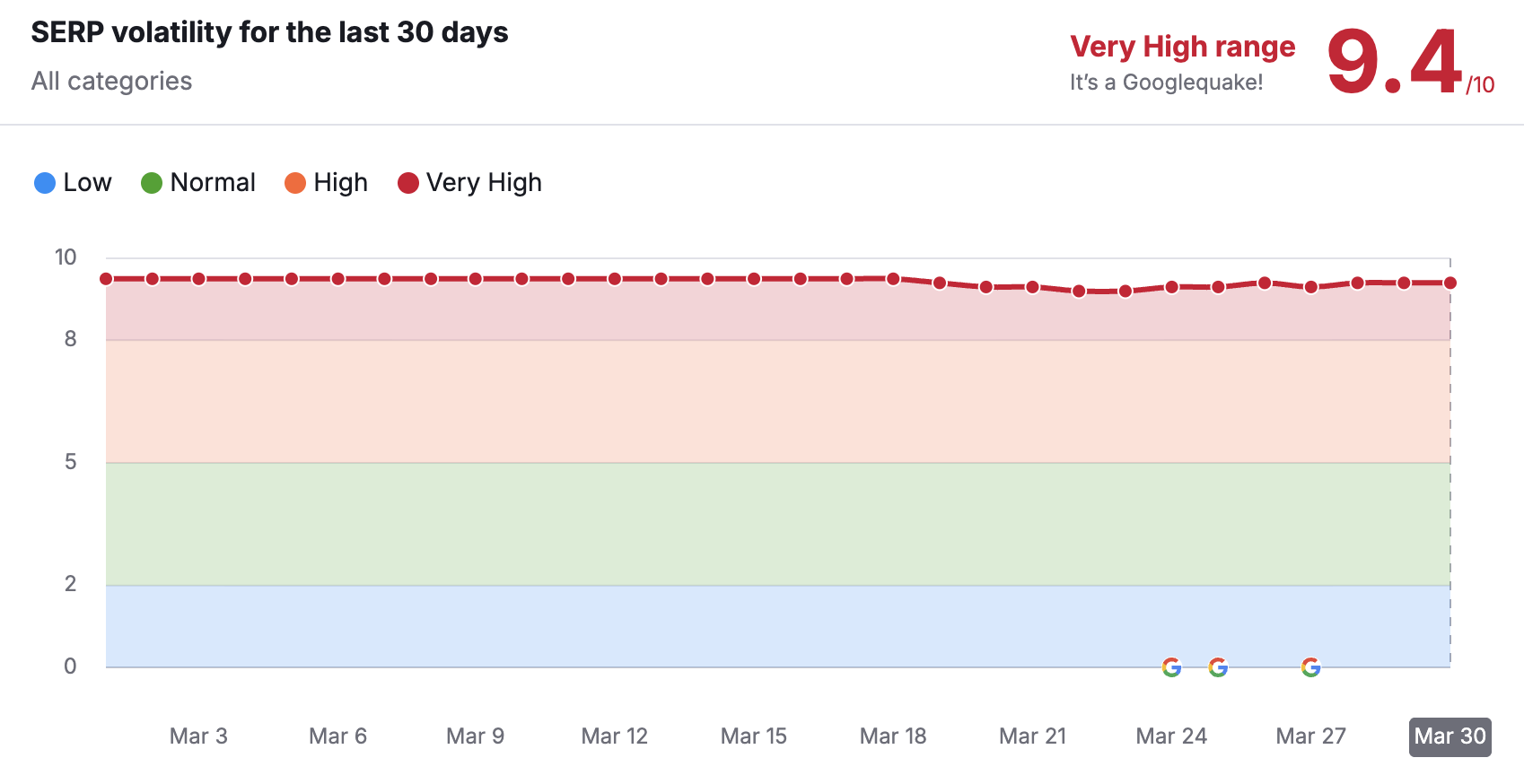
Chart by Semrush shows early data pointing to significant movement across search results, with elevated volatility indicating widespread ranking changes during the March 2026 core update rollout.
What Google Shared About the Update
Google confirmed the rollout through its Search Status Dashboard shortly after it began. The company identified this as a broad core update and noted that completion may take up to two weeks.
No additional blog post or detailed explanation accompanied the release. This follows a familiar pattern, where Google provides minimal commentary for broad updates and instead points back to its existing guidance.
Why Law Firm Websites May Feel the Impact
Websites that rely on high intent search traffic tend to see movement early in a rollout like this. Practice area pages, city pages, and attorney profiles are closely tied to client acquisition, so even small ranking changes can affect intake.
A page that previously held a top position for a valuable query may drop if competing content is now viewed as more helpful or more aligned with user expectations.
These changes do not indicate a penalty in most cases. Instead, they reflect how pages stack up against others targeting the same queries.
A careful review should focus on identifying which pages moved and whether those changes are isolated or spread across multiple sections of the site. That context helps determine whether the cause is page-specific or part of a broader pattern.
Recent Update Activity Adds Important Context
This rollout follows closely behind Google’s March 2026 spam update, which concluded just two days earlier. The short gap between updates makes it important to separate the effects of each when reviewing performance.
Earlier in the year, Google released an update tied only to Discover. That update did not affect traditional search rankings. This current rollout, however, applies directly to search results where law firms compete for visibility.
Looking at prior activity also helps set expectations. The December 2025 core update took 18 days to complete. A two week timeline for this update falls within a normal range, which suggests that ranking movement may continue for several cycles before stabilizing.
Understanding this sequence helps avoid misattributing changes to the wrong update or to recent site edits.
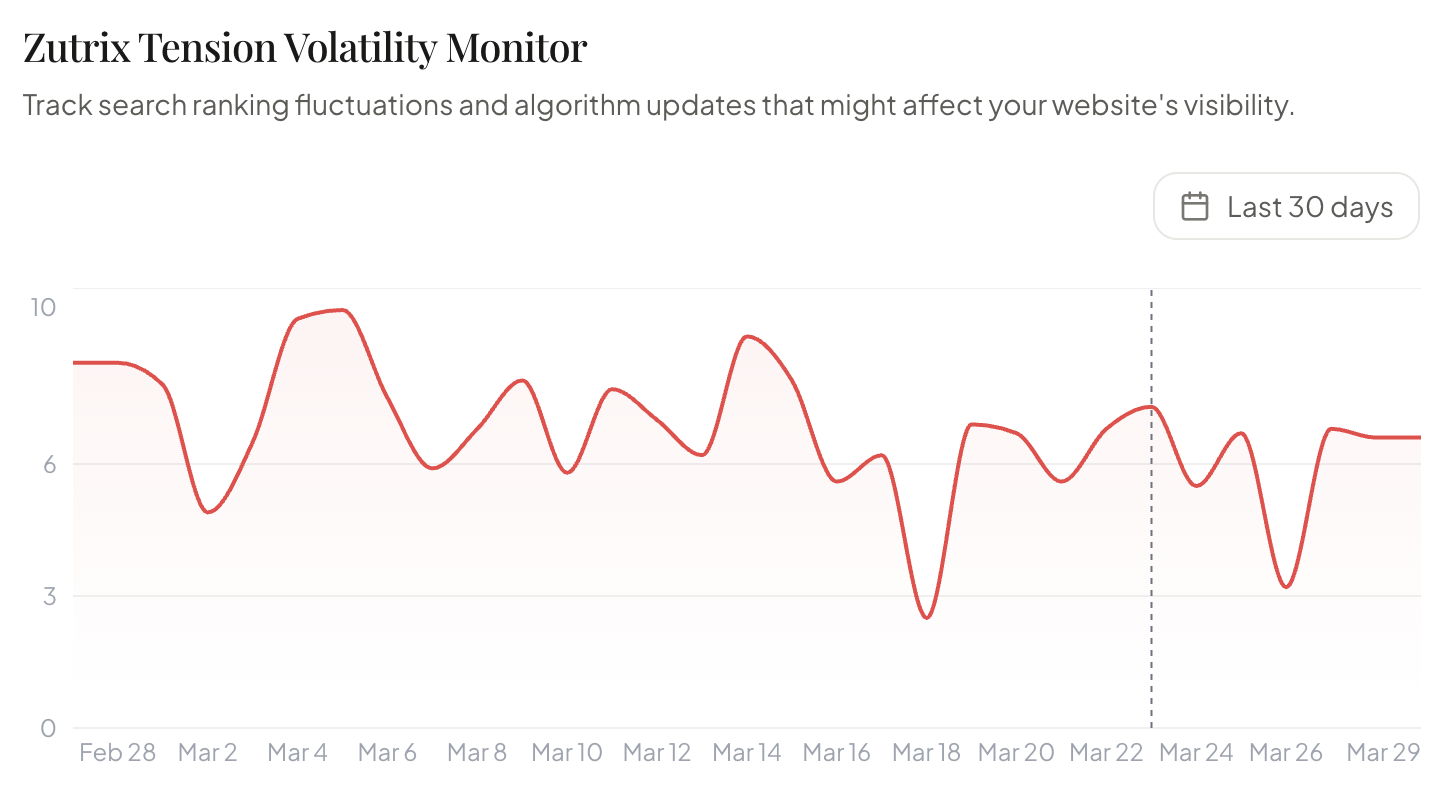
Chart by Zutrix shows volatility trends over the past month, highlighting increased instability leading into this rollout, with higher spikes indicating greater movement and less consistency in Google rankings.
What to Monitor While Rankings Are in Flux
During the rollout, the priority should be tracking performance without making immediate changes.
Start with tracking queries tied to core services. Focus on terms that consistently drive consultations or case inquiries. If positions begin to change, review whether the movement affects one page or several.
Search Console can provide helpful direction. Look at impressions, clicks, and average position over a span of days rather than reacting to a single drop.
Pages tied directly to lead generation deserve the most attention. A fluctuation on a blog post carries less weight than movement on a primary service page.
Patterns matter more than isolated changes. When multiple pages decline at the same time, that often points to a broader adjustment in how the site is being evaluated. When movement is limited to one page, the cause is more likely specific to that content.


