Google Updates AI Overviews With Expanded Website Link Displays
Posted on Friday, February 20th, 2026 at 3:48 pm
Google Expands Link Visibility Inside AI Results
Google has introduced a more visible link experience inside AI Overviews and AI Mode. When users hover over certain links on desktop, a pop up card now appears with expanded site details and a clearer preview of the source. The design gives websites more visual presence within AI generated responses.
Earlier versions of AI Overviews included source links, but they were subtle and easy to overlook. This update makes those links more noticeable and easier to interact with. Instead of small inline citations, users now see grouped links that surface in a dedicated hover window.
The change signals that Google is continuing to refine how AI answers connect back to publishers. While AI responses remain central to the experience, the path to the underlying websites is now more prominent. That adjustment could have meaningful implications for how users engage with AI driven search results.
Inside Google’s New AI Link Cards
On desktop, hovering over grouped links inside an AI Overview now triggers a pop up card. That card displays a larger site icon, the publication or brand name, and additional descriptive context about the page. Users can move directly from the AI answer into the website with a single click.
The links are no longer tucked quietly into the body of the response. They are clustered together and visually separated from the surrounding text. This makes them easier to identify and interact with.
On mobile, Google is also displaying more prominent link icons within the AI response itself. The presentation feels closer to a traditional search result, where the source is visually distinct rather than embedded as a small citation.
Compared to earlier tests, the current rollout appears more polished and intentional. The design gives cited websites stronger visibility inside AI generated answers, especially on desktop where the hover behavior adds an additional layer of interaction.
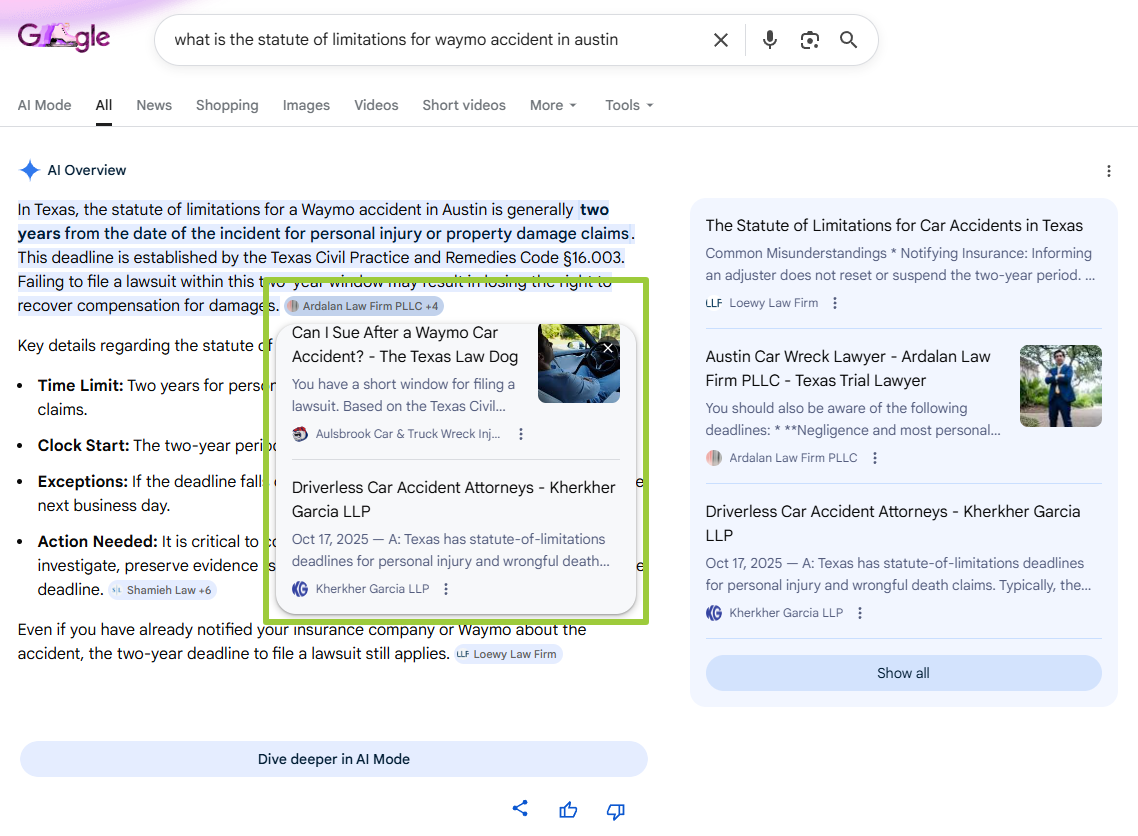
The image above is an example of how how earlier AI Overviews embedded small citation links directly inside the summary, making them easy to overlook.
Why Google Is Making This Change
According to Google’s Search team, the goal of this update is to help users access web content more easily from within AI responses. Robby Stein shared on X that grouped links will automatically appear in a pop up on desktop and that more descriptive link icons will show across both desktop and mobile experiences. The stated objective is to make it easier for users to jump directly into relevant websites.
Google’s internal testing suggests that the updated interface encourages more engagement with cited sources. By increasing the visibility of link cards and giving them stronger visual separation, the company appears to be reinforcing the connection between AI answers and the broader web.
This move also addresses ongoing publisher concerns about traffic loss from AI generated summaries. When links are harder to notice, fewer users click through. By giving those sources more prominence, Google is signaling that website publishers remain part of the AI search experience.
While AI Overviews continue to summarize information, the pathway to original content is now clearer. That balance between AI generated answers and direct website access appears to be the intent behind the redesign.
What This Could Mean for Website Traffic
When links are small and embedded inside AI summaries, users often stay within the answer. By enlarging icons and introducing hover cards, Google is making the source more noticeable and easier to access. That visual prominence alone can influence user behavior.
The new design gives websites a clearer presence inside AI results. Instead of scanning for subtle citations, users can quickly identify where the information comes from and move to that site. The fewer steps required, the more likely a click becomes.
There is also a psychological factor at play. A visible brand name, favicon, and descriptive preview create familiarity and trust. When a source feels recognizable, users are more comfortable leaving the AI response to explore further.
That said, traffic gains are not guaranteed. Inclusion inside AI Overviews still depends on authority signals and content clarity. AI systems are already narrowing options and reducing the amount of comparison users do before they ever scroll through traditional results. The design may encourage clicks, but only for sites that are consistently cited in the first place.
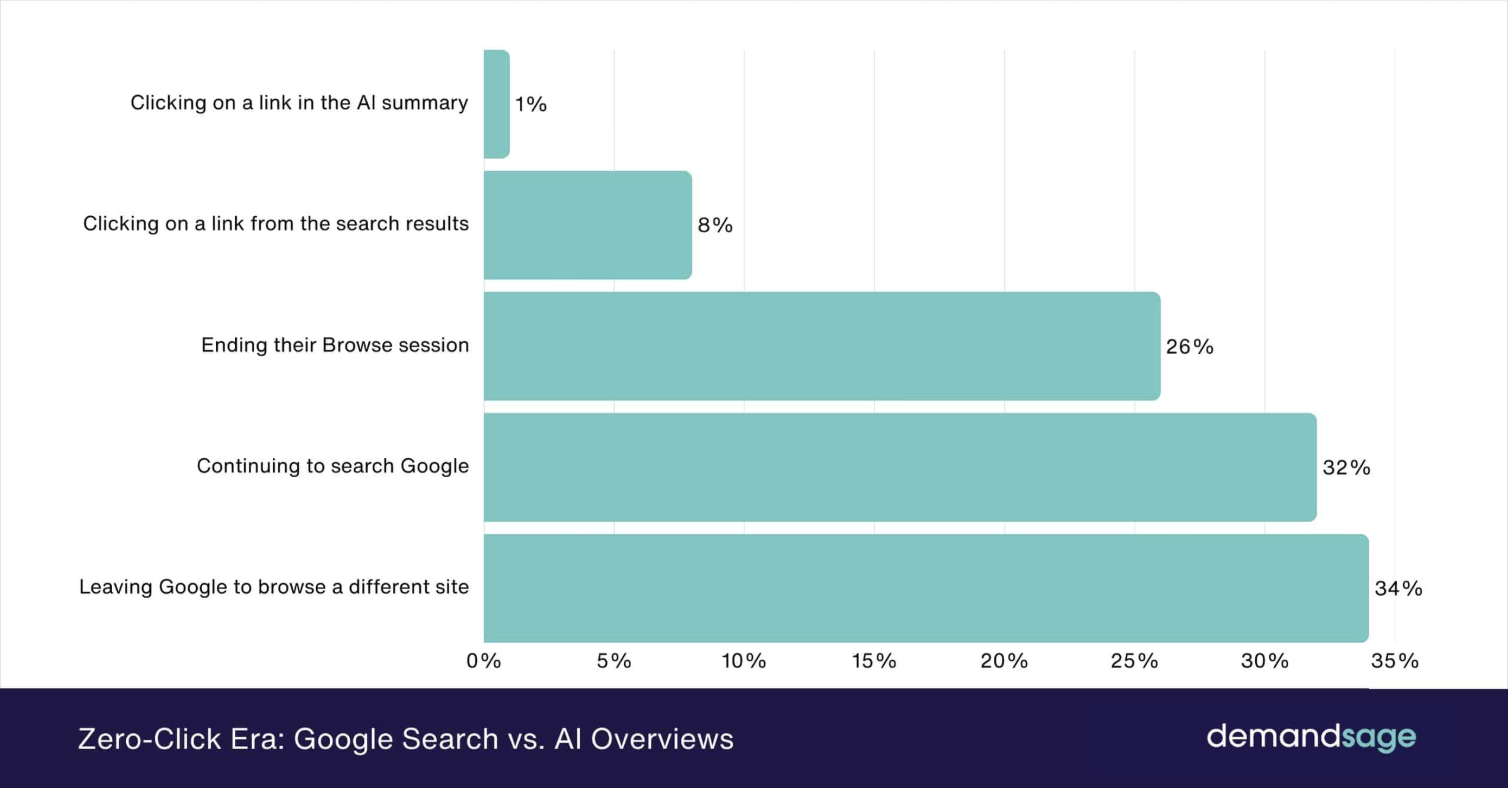
Recent data from DemandSage shows that very few users click links directly from AI summaries. Most either continue searching or leave Google entirely, reinforcing how limited AI click through behavior currently is.
AI Traffic Still Lacks Clear Reporting
Even if this update leads to more clicks, there is still a visibility gap in reporting. Google Search Console does not currently break out traffic specifically from AI Overviews or AI Mode. That makes it difficult to measure the direct impact of these interface changes.
Website owners can see overall impressions and clicks, but they cannot isolate which portion came from AI generated results. This creates uncertainty when trying to evaluate performance inside AI experiences. Firms may notice fluctuations in traffic without clear attribution.
Until Google provides more granular reporting, tracking AI visibility requires a different approach. Monitoring inclusion frequency across high value queries, reviewing citation patterns, and analyzing changes in branded search activity can provide indirect signals.
The interface may be improving, but measurement tools have not caught up. That disconnect remains one of the biggest challenges for organizations trying to understand how AI search is influencing website traffic.


