Google’s December 2025 Core Update: What Law Firms Should Know Now
Posted on Wednesday, December 31st, 2025 at 6:44 pm
December 2025 Core Update Completed
Google has finished rolling out its December 2025 core update, closing out the final major algorithm update of the year. The rollout began on December 11 and wrapped up late on December 29, taking just over eighteen days to complete.
Google confirmed the update through its Search Status Dashboard and a public LinkedIn post. The company described the change as a routine core update intended to improve how relevant and satisfying content appears in search results. As expected, Google did not release any new rules or special instructions tied specifically to this update. Instead, it pointed publishers back to its long standing guidance on creating useful and reliable content.
Search activity began to move within a few days of the announcement. Another noticeable surge in ranking movement appeared around December 20. This pattern followed what is typically seen during broad core updates. Some sites experienced visibility losses, others saw improvements, and many sites recorded little to no measurable change.
At this stage, the rollout is complete and rankings should begin to stabilize. That makes this the right moment for site owners and marketing teams to assess performance and identify any meaningful changes tied to the update.
How This Update Fits Into Google’s 2025 Timeline
The December update marks Google’s third major core update of the year. It follows the June 2025 update and the earlier March 2025 release. What stands out is the five-month gap between June and December. That kind of pause is unusual, especially considering that the prior three updates in 2024 were packed into just five months.
While Google does not publish a fixed schedule for these updates, this timeline suggests a slower release pace in 2025 compared to the previous year. Fewer updates, however, does not mean reduced impact. Each core update continues to bring large-scale changes to how websites are evaluated, especially those with aging content or poor engagement metrics.
Legal marketers and law firm owners tracking year-over-year performance should take note of the timing. If you noticed a drop in organic traffic between mid-December and early January, this update may be the reason. Comparing those results to trends seen after March and June will offer a more complete picture of how your site responded to Google’s core adjustments throughout the year.
Ranking Volatility: Who Gained, Who Lost
The December update caused significant ranking fluctuations across multiple industries, and legal websites were no exception. The first noticeable shift in visibility came on December 13, just two days after the rollout began. A second wave of volatility followed on December 20, marking a peak in ranking movement across many keyword categories.
Some websites saw a sharp drop in their search visibility, particularly those with outdated or overly templated content. Others recorded sudden gains, often tied to strong on-page experience and consistently updated information. But as with most core updates, the majority of websites fell somewhere in between, with changes that were less dramatic but still worth reviewing.
Monitoring tools from platforms like Semrush and Moz reported widespread turbulence, reinforcing the idea that this was not a minor update. Legal websites that depend on organic visibility for lead generation and intake should already be analyzing search traffic patterns from mid-December through the end of the month. Those who saw declines may find the cause rooted in content quality, page structure, or outdated technical practices that Google’s system continues to reward less over time.
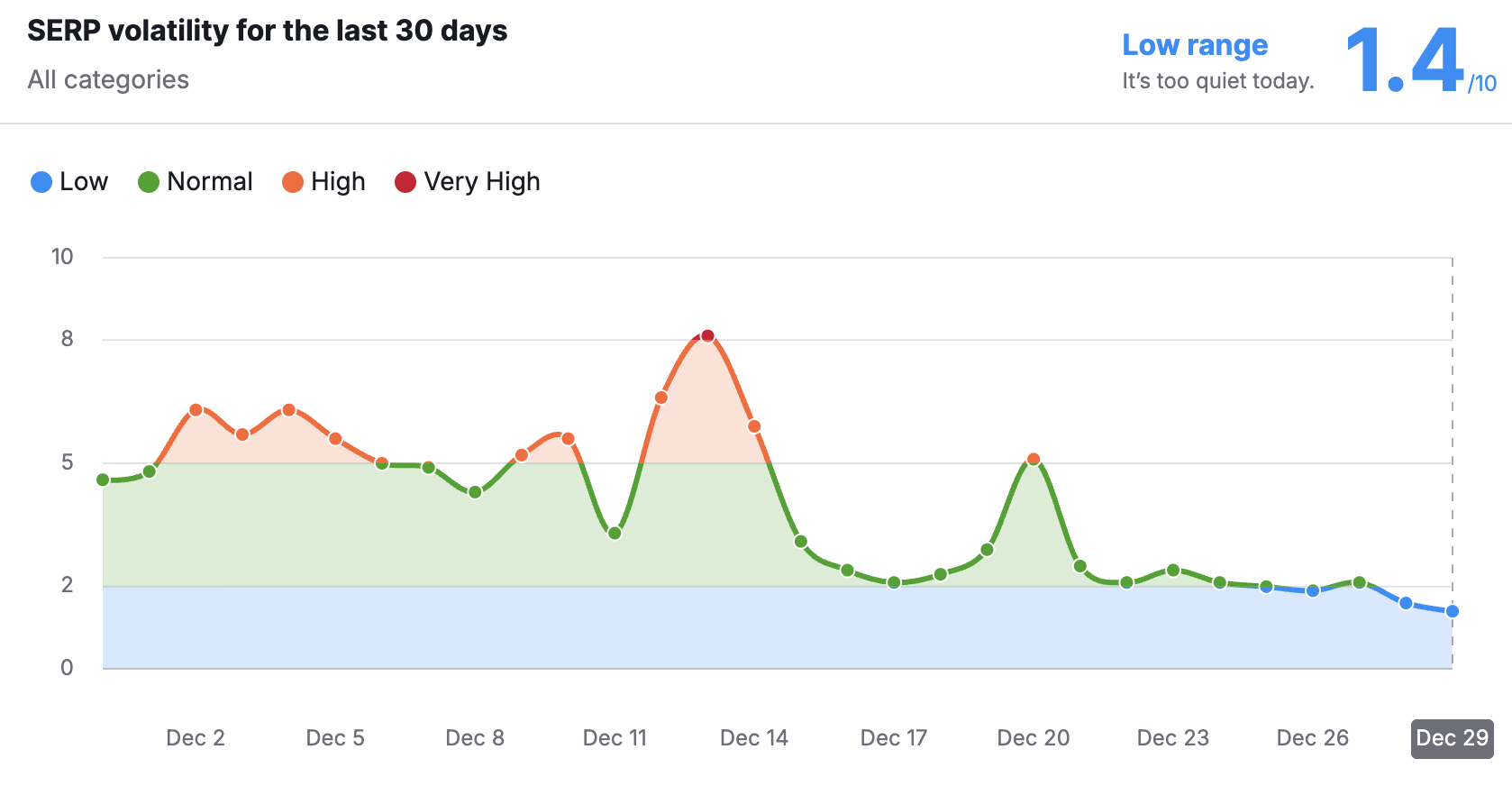
Image by Semrush
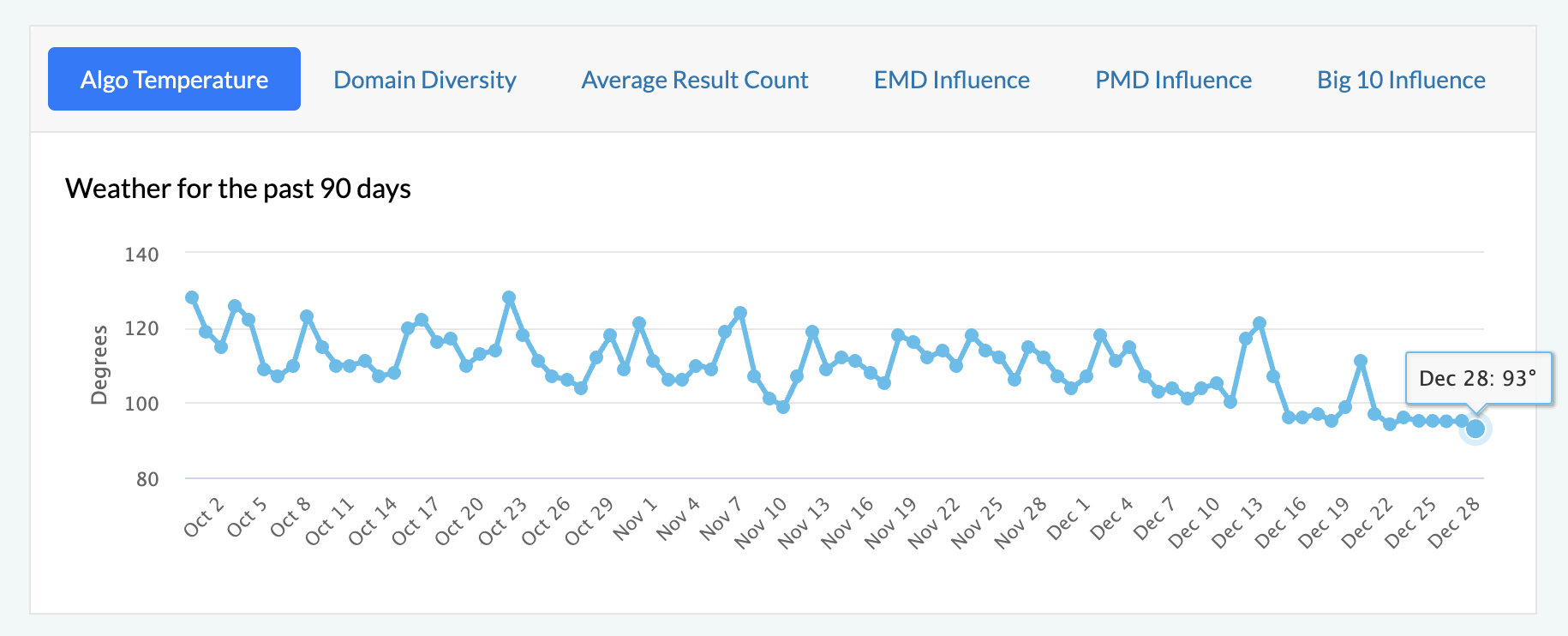
The graph (above) by Moz shows daily temperature-style “volatility” in Google search results over the last 90 days, with lower values meaning calmer rankings and higher values indicating stronger algorithm movement.
What Google Isn’t Saying Still Matters
Google didn’t publish new recovery steps for the December update. Instead, it referred back to the same core content principles it has emphasized for years. If rankings dropped, it doesn’t necessarily mean a penalty. It likely means Google found other content it now considers more useful or relevant for certain queries.
The core message remains unchanged. Websites that prioritize expertise, clear writing, and audience-focused content tend to perform better in the long run. The same set of questions still applies. Does your content explain legal topics with clarity and authority? Is it updated regularly? Does it serve a purpose beyond trying to rank?
Recovery is not always immediate. While some sites regain traction between updates, most meaningful shifts happen when Google refreshes its core algorithm again.
Google’s “people-first content” guide remains the most valuable reference. It outlines what the algorithm rewards and continues to set the tone for how content should be created and maintained.
Why This Matters for Law Firms’ Marketing Strategy
For law firms investing in organic visibility, Google’s December update reinforces a familiar reality: content quality still dictates results. Firms relying on outdated articles, thin practice area pages, or generic legal explanations are increasingly at risk of losing ground to competitors producing stronger, more original material.
This update also highlights Google’s ongoing shift toward rewarding content that directly answers user questions without fluff. Pages that bury helpful information under layers of keyword stuffing or boilerplate language are becoming easier for Google to ignore. That means content written only to satisfy SEO checklists is losing its edge.
The December rollout is another reminder that high rankings are no longer earned by simply having more pages or checking technical boxes. Google is weighing relevance, clarity, and trust more heavily than ever. Firms should focus on creating resources that speak clearly to their audience and demonstrate experience with the legal issues they cover.
Strong technical SEO still matters, but without meaningful content that reflects legal expertise, even the fastest websites will struggle to compete in search.
What to Do Before the Next Update
Now that the December rollout is behind us, this is the right time to review your site’s content and performance. Google’s next core update will likely arrive within a few months, and firms that plan ahead are in a better position to benefit from it.
Start by auditing the pages that matter most. Look for outdated explanations of legal processes, thin copy that lacks detail, and headlines that don’t match what people are searching for. Check for broken links, unclear formatting, or pages that fail to load properly on mobile devices. These issues may seem small, but they often influence how search engines evaluate site quality.
Analytics can help identify which pages gained or lost visibility in December. Pay attention to bounce rates, time on page, and the search terms bringing users to your content. That data offers insight into how real users interact with your site and where improvements can make the biggest difference.
Finally, treat Google’s “people-first content” guide as more than a suggestion. It should inform how every page on your site is written, organized, and maintained. That kind of content is harder to create, but it’s also harder to replace when Google updates its systems again.
How TSEG Helps Firms Stay Visible When Rankings Shift
Google’s December update did not bring new rules, but it raised the bar again for content quality. Pages that miss the mark are being pushed down in search results. For law firms, that can mean a drop in leads and fewer new client inquiries.
At TSEG, we build legal websites with Google’s highest standards in mind. Our content strategies are shaped by real data, and our pages are written to inform, not just to rank. We track how each update impacts our clients and adjust quickly when the rules of search change.
Whether you’re recovering from a traffic drop or trying to protect your position in search, we can help. Our team works behind the scenes to make sure your firm is being found for the right reasons and by the right audience. Contact us today.


