Law Firm Map Packs Appearing in AI Overviews, and with More Ads
Posted on Wednesday, February 4th, 2026 at 9:41 pm
Google Quietly Reshapes Local Results
Google has dramatically increased the number of paid listings appearing in its local pack, the section of the search results that shows a map and a shortlist of nearby businesses. In early 2025, fewer than 3 percent of local pack results included ads. By January 2026, that number had exploded to nearly 22 percent across tracked keywords.
This change did not come with a public announcement or press release. It is happening quietly, but at scale, and the legal industry is already feeling it. Attorneys in competitive markets are now contending with a rise in paid placements that push organic listings farther down the page.
The data behind this surge was shared in a LinkedIn post by Joy Hawkins, who published updated figures from 1,200 mobile ranking reports showing a steady rise in ads within the local pack.
What Are Local Pack Ads
Local pack ads are paid placements that appear at the top of the map results when someone searches for a nearby service. They look nearly identical to organic listings, except for a small “Sponsored” label that appears above the business name.
The design is subtle, and that’s intentional. Most users do not pause to distinguish between paid and unpaid listings, especially on mobile. This gives advertisers a strong visibility advantage. With just one sponsored result above the map, a single ad can displace the top organic spot and redirect valuable clicks.
In practice, that means your law firm could be bumped down the screen even if you are the highest-ranked result in your area. Google is giving paid listings premium real estate, and the trend is growing quickly.
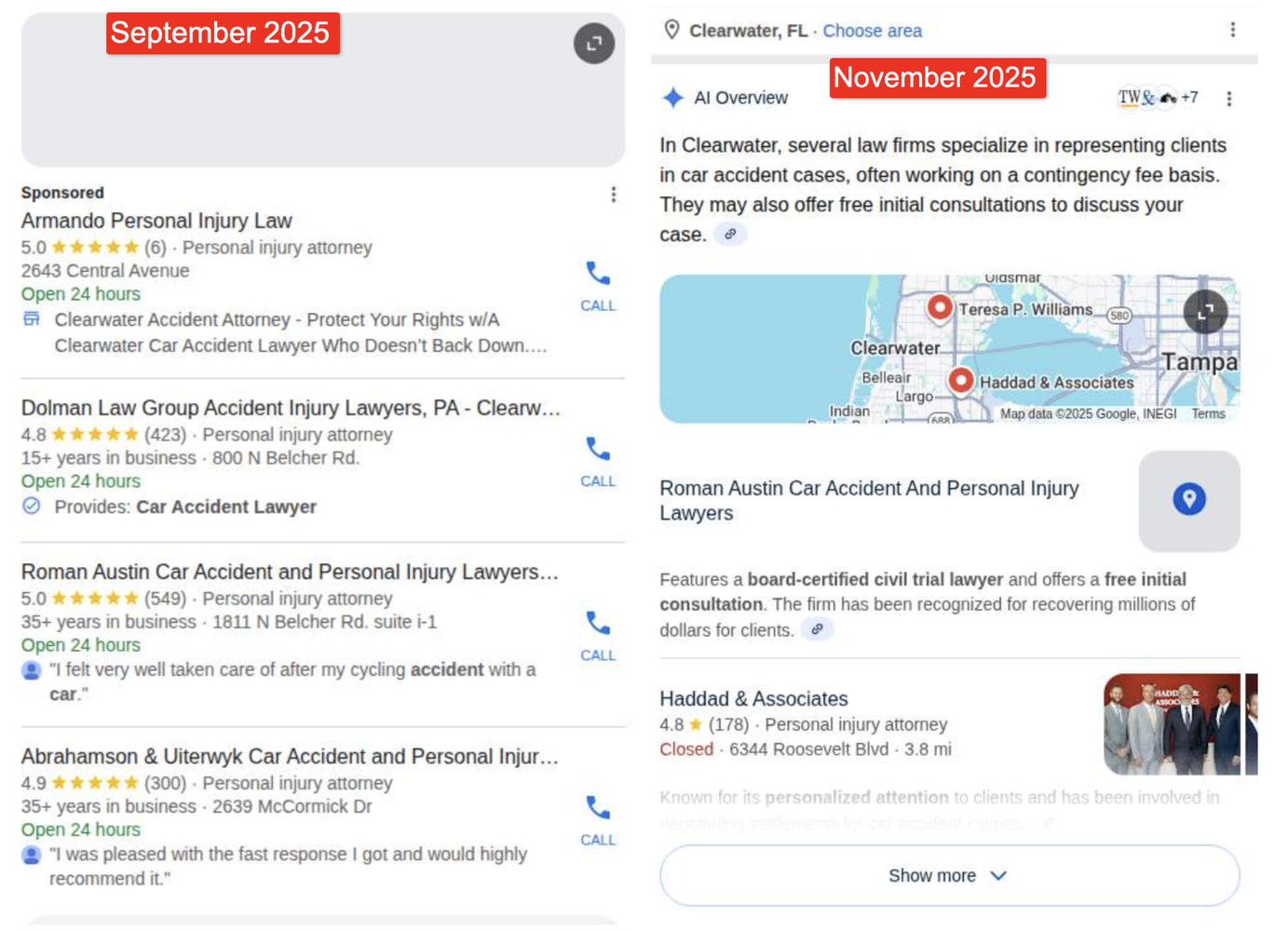
Image from Joy Hawkins’ LinkedIn post
Why This Matters for Law Firms
The local pack has long been one of the most important sources of new business for attorneys. When someone searches for “car accident lawyer near me” or “personal injury attorney in Dallas,” those map results are where the first clicks usually happen.
Now that ads are showing up in nearly one out of every five local searches, those clicks are being rerouted. Even firms with strong SEO and hundreds of five-star reviews are finding themselves underneath a sponsored listing that did not exist a year ago.
This change increases the cost of staying visible. Firms that have relied on organic performance alone are seeing their traffic diluted. Those that advertise are now forced to compete for map pack space that used to be driven by reputation and local optimization. The rules have changed, and staying competitive requires a different strategy.
What the Numbers Reveal About Google’s Strategy
The rise in local pack ads has been anything but subtle, but it has gone largely unnoticed by most users and business owners. There was no official update from Google. No public documentation. Just a steady climb in ad volume that accelerated sharply over the past year.
The numbers publicly shared by Hawkins’ post summarizes data from the ranking reports. According to those findings, the increase began in mid-2025 and continued through January 2026, with consistent results across multiple markets and industries.
This is not a limited test or a small rollout. Google is scaling local pack ads the same way it has expanded sponsored content in other areas of search. Law firms are among the industries most affected, especially in practice areas that already pay a premium for visibility.
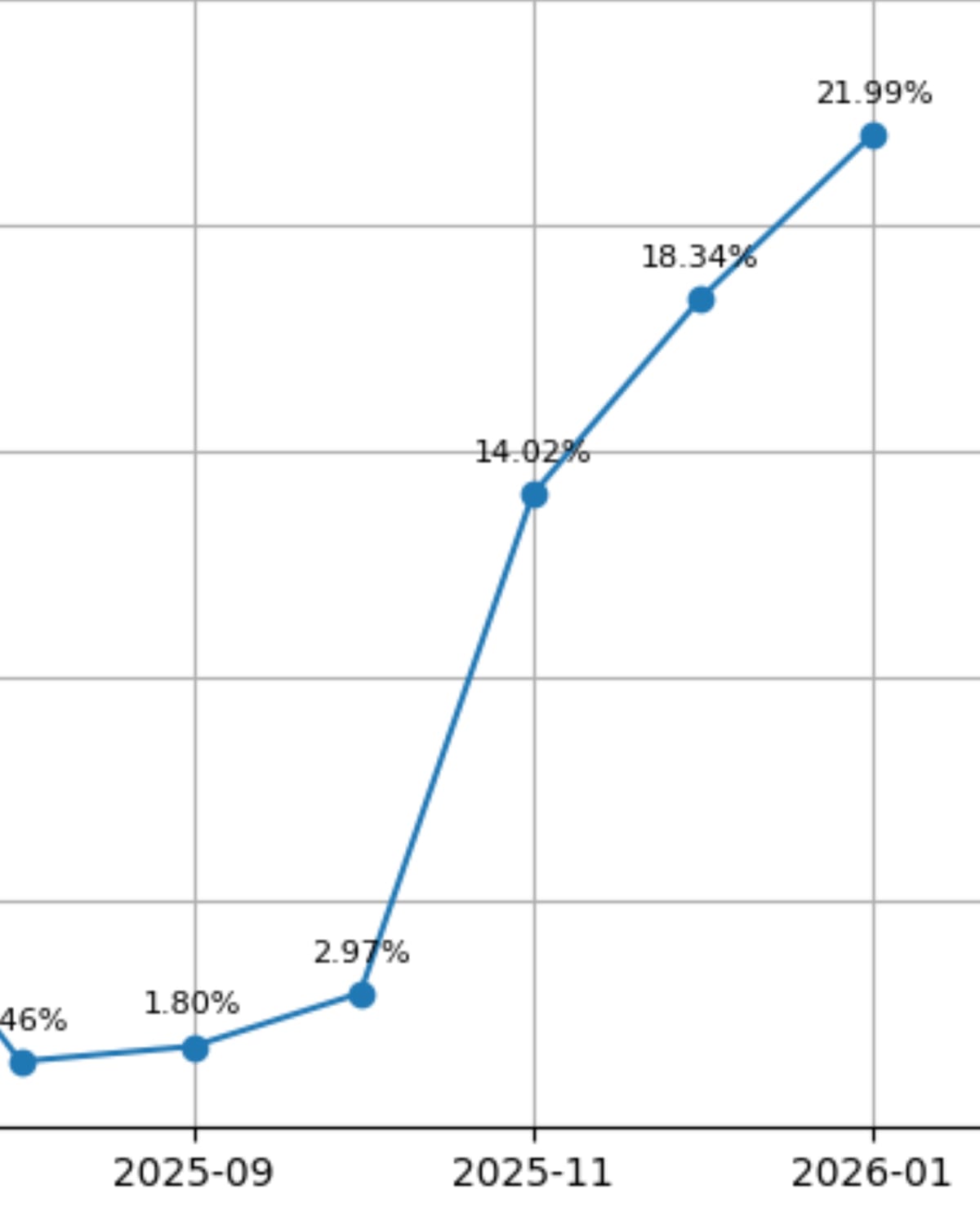
This graph by PPC Land shows the rapid increase in the percentage of keywords triggering local pack ads on Google, rising from under 3 percent in late 2025 to nearly 22 percent by January 2026.
Adjusting Your Strategy for Local Search Changes
This trend is already changing how law firms compete in search. Ignoring it means losing ground in local visibility, whether your firm is actively advertising or not.
Start by auditing your current performance in the local pack. Search your core keywords on mobile and look at where your firm appears. If you see sponsored listings above your name, your organic visibility is no longer the top position.
Next, review your advertising strategy. Google’s platform now includes local pack ads as part of its paid ecosystem, and these placements are drawing significant attention. If your competitors are running local ads and you are not, the gap in traffic will grow over time.
Finally, make sure your local SEO is still dialed in. Strong reviews, accurate business listings, and optimized profiles still matter, especially in areas where ads have not yet taken over. But be clear-eyed about what organic alone can achieve in today’s results.
These changes are making it harder for firms to rely on rankings alone. Ads are taking top spots, and Google’s AI features are beginning to do the same. AI results are impacting visibility alongside paid placements, and both are reducing the space once dominated by organic listings.
Law Firms Need More Than SEO to Compete
Google is not slowing down its push toward pay-to-play visibility. As more ad inventory appears in the local pack, firms that depend on organic rankings alone are seeing their exposure shrink. This trend impacts client acquisition, ad budgets, and long-term growth.
TSEG monitors changes in the digital space that directly affect how law firms get found. We do more than respond to search updates. We anticipate them. Whether you need a plan to compete with new ad placements or want a deeper strategy for protecting your position in local search, our team is built to help.
We keep firms visible, competitive, and in control when search results change without notice. Reach out today to see how your firm stacks up in today’s search results.


