Meta’s New Muse AI Agent Could Change How Clients Find Attorneys
Posted on Thursday, October 15th, 2026 at 8:53 pm
Another AI has entered the race. Meta is making a major push to introduce people to a new type of virtual assistant that can complete tasks on their behalf. With the September 2026 launch of Muse and a national advertising campaign promoting its capabilities, Meta is encouraging people to use AI for everyday decisions, purchases, scheduling, and research.
For law firms, this (again) raises an important question about how prospective clients might eventually find and hire attorneys. If consumers become comfortable asking AI to research businesses, compare options, and complete tasks, finding legal representation could become part of that process.
Meta’s latest developments offer an early look at how its AI products could influence attorney discovery and what law firms can do to prepare.
Meta Introduces Muse to Mainstream Consumers
On September 8, 2026, Meta introduced Muse, a personal AI agent designed to perform tasks independently after receiving instructions from a user. Its capabilities include browsing websites, completing online forms, sending emails, and managing activities across connected applications.
By now, it’s nearly impossible to have avoided the massive ad push Meta is actively rolling out on all major CTV and streaming platforms. Meta followed the launch with a national television advertising campaign emphasizing how Muse can handle everyday responsibilities with limited user involvement. The campaign represents a substantial effort to encourage mainstream adoption of AI agents. Check out one of the ads below.
<div style=”position:relative; width:100%; padding-top:56.25%; padding-bottom:40px;”><iframe src=”https://www.ispot.tv/share/SdXb” style=”position:absolute; top:0; right:0; left:0; bottom:0; width:100%; height:100%;” frameborder=”0″ scrolling=”no” allowfullscreen=””></iframe></div>
Muse has also generated considerable early interest. According to The Wall Street Journal, the app had accumulated nearly nine million downloads by October 12, although maintaining long-term user engagement remains a challenge.
These developments make Muse worth watching for law firms. Meta is investing in consumer habits that could eventually extend to researching professional services, including hiring an attorney.
Understanding the Difference Between Meta AI and Muse
A lot of names are being thrown around, so let’s clarify the big two. Meta AI is the company’s existing assistant, available through Facebook, Instagram, Messenger, WhatsApp, and other Meta experiences. It helps users ask questions, research topics, and discover information and recommendations.
Muse is a separate personal AI agent with capabilities designed to carry out tasks across websites and connected services. A user can provide instructions, and Muse can continue working toward the requested outcome, requesting approval when appropriate.
Both products are supported by Meta’s AI technology, including its Muse family of models. The distinction matters because Meta is developing consumer experiences that can progress from researching a question to completing activities related to the answer.
Meta reinforced that direction on October 12 with the announcement of Muse Wonder and Muse Wonder Full. These new models are designed to handle more demanding tasks, including those involving law, insurance claims, and financial information. Meta plans to introduce Muse Wonder into the consumer Muse experience, beginning with subscribers.
Although these capabilities do not establish Muse as an attorney referral service, they demonstrate Meta’s interest in developing AI that can handle more complicated personal and professional decisions.
Could Muse Help Prospective Clients Find Attorneys?
Consider someone injured in a commercial trucking accident who wants to explore their legal options. Instead of individually researching local firms, that person could eventually ask an AI agent to identify attorneys experienced in trucking litigation, compare their qualifications, and find out how to request a consultation.
We tested the AI assistant with an MVA case in Atlanta with specific mentions of 18 wheeler accidents and Spanish speaking law firms. Immediately, the chat became more conversational with a “typing” bubble and a surprisingly empathetic response before it listed some law Atlanta PI firms. We pushed the test further into the agentic capabilities asking it to schedule consultations for us – which it was able to do. Muse opened its own browser session and started showing its work as it navigated through the websites and filled out the law firms’ contact forms based on the info we gave it. One prompt suddenly turned into messages in our email inbox asking to confirm a time for our accident consultation.
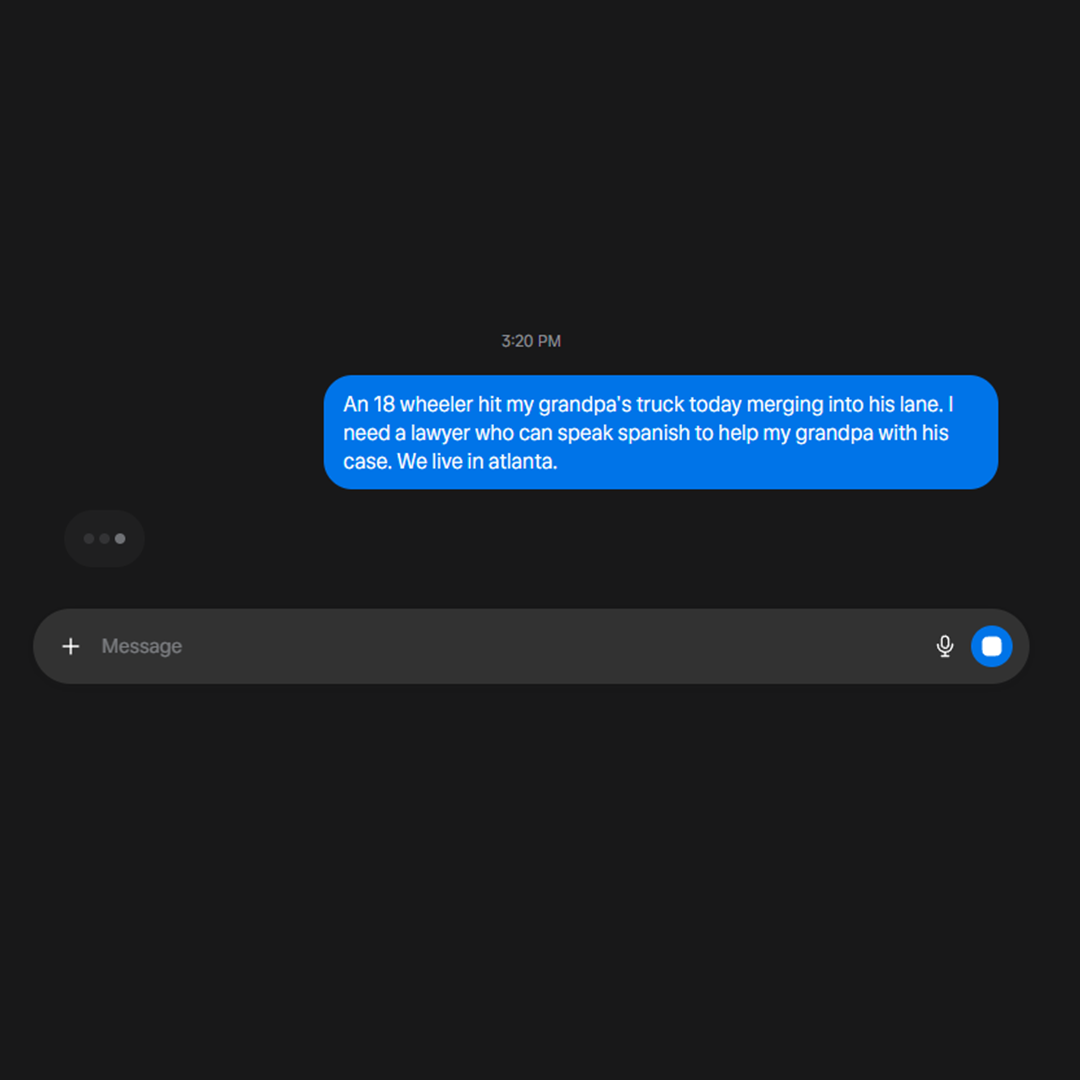
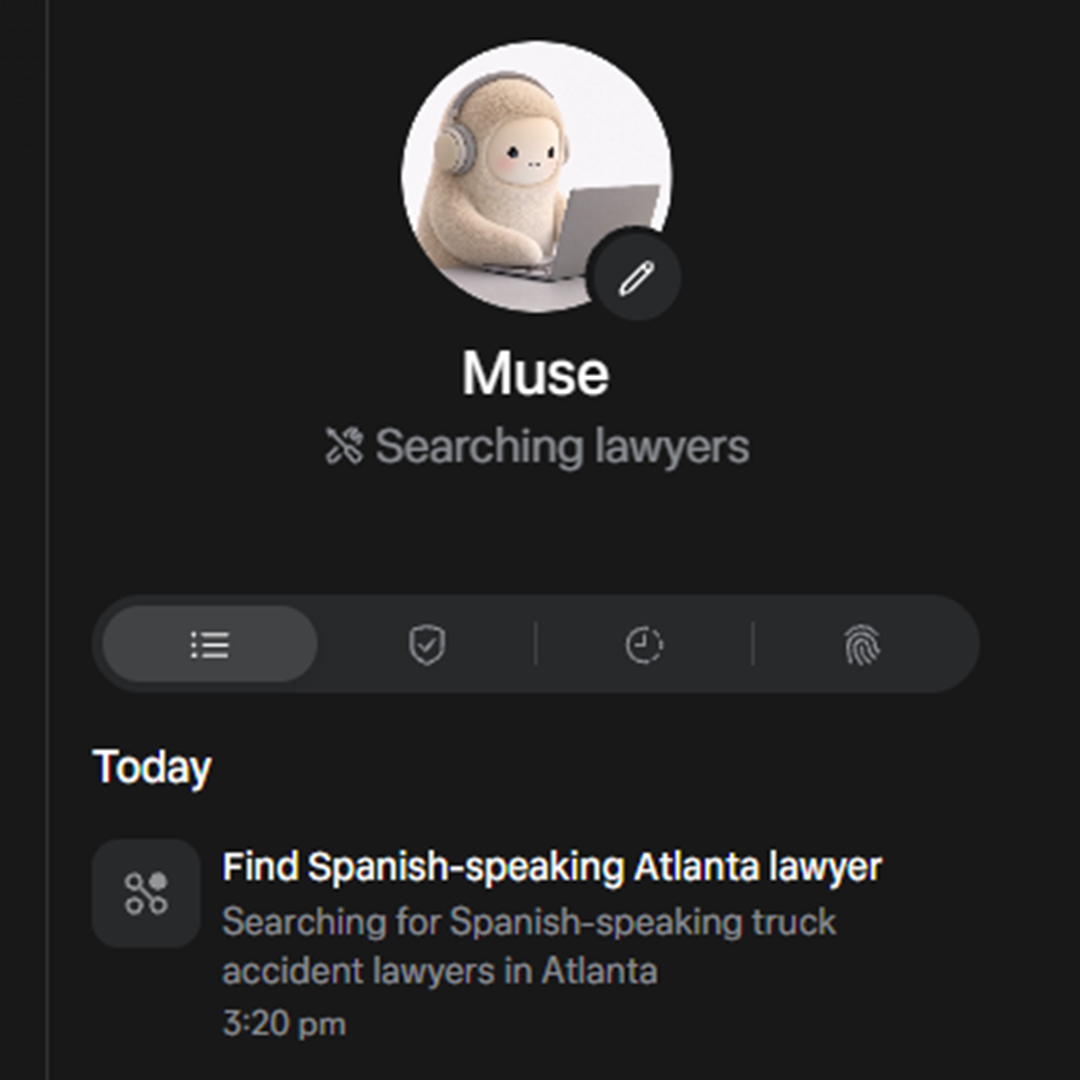
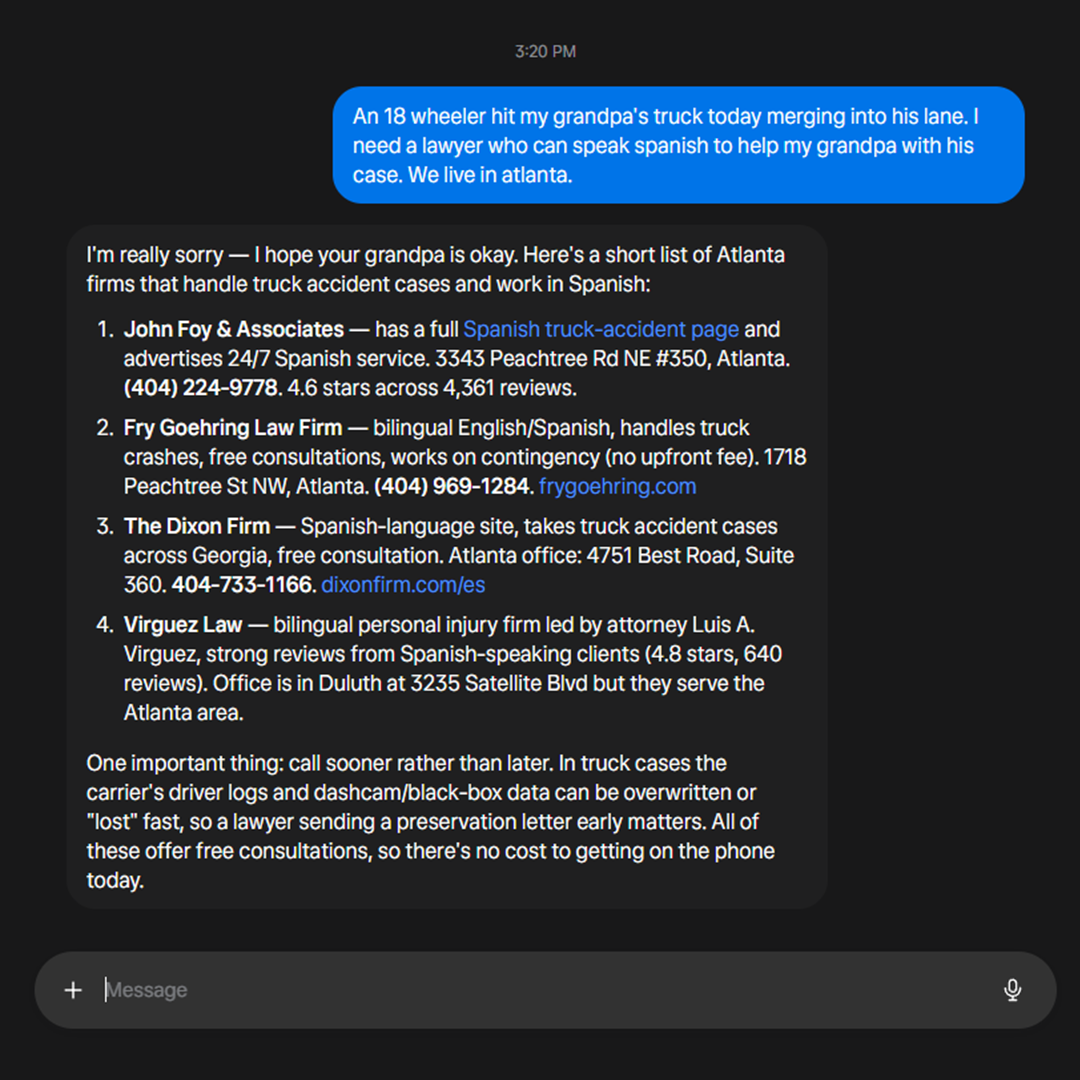
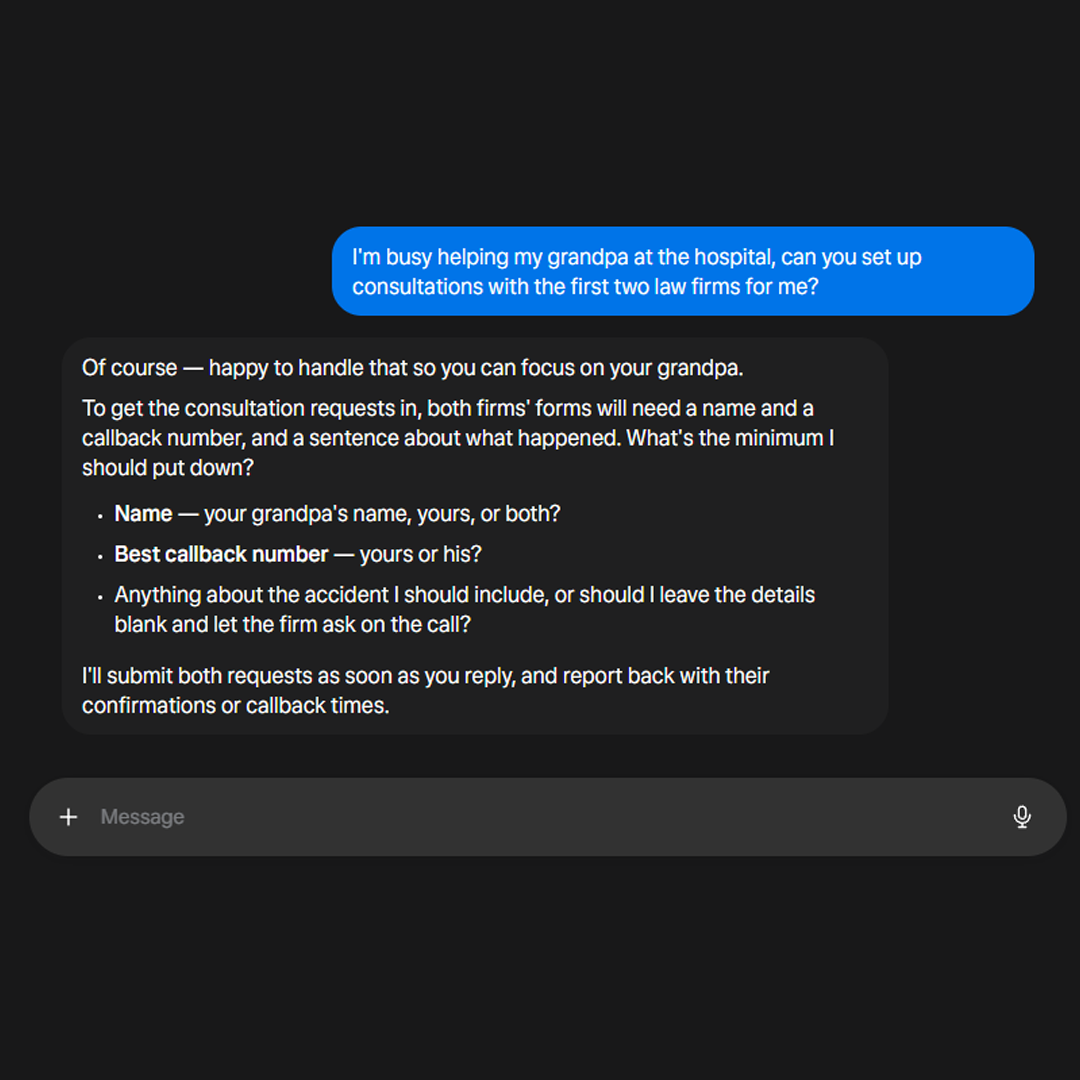
An important consequence is that an AI agent could influence which firms a prospective client evaluates. Information gathered during the research process might determine which attorneys appear in a comparison or receive further consideration.
There is still limited evidence that consumers are regularly using Muse to hire lawyers. Traditional search engines and established referral channels remain important sources of legal clients. Nevertheless, Meta’s investment in autonomous AI creates another potential route through which prospective clients could discover legal services.
What Could Muse Learn About Your Law Firm?
An AI agent researching an attorney would need access to information that helps establish whether a particular firm meets a prospective client’s needs.
For example, a search involving a commercial vehicle accident could require identifying firms that handle trucking cases, operate in the relevant jurisdiction, and offer an accessible consultation process.
A firm’s website would be an important source of this information. Clearly identified practice areas, attorney credentials, case experience, office locations, and contact details help prospective clients understand what the firm offers.
Meta’s existing platforms introduce additional considerations.
Facebook business pages, Instagram accounts, public posts, and other accessible information can contribute to a firm’s broader digital presence. Meta AI already incorporates information from multiple sources when answering certain questions and providing recommendations, including content from Meta’s own platforms.
However, Meta has not published a formula explaining how Muse selects or recommends law firms. Nor has the company established that posting more frequently on Facebook or Instagram will improve a firm’s placement in AI-generated recommendations.
The practical objective is to ensure that accurate, useful information about the firm is accessible wherever a prospective client or an AI system might reasonably look.
How Law Firms Can Prepare for Meta’s New AI Agent
Although Muse remains an emerging consumer product, law firms can take several practical steps without investing in speculative optimization tactics.
1. Review your firm’s Facebook and Instagram profiles.
Confirm that business information, practice descriptions, locations, contact details, and website links are accurate. Public profiles should clearly identify the firm’s services and the clients it represents.
2. Make your firm’s website easy to research.
Practice area pages should explain the specific types of cases the firm handles. Attorney biographies, office information, and consultation options should be accessible without unnecessary searching.
3. Publish content that addresses prospective clients’ questions.
Use the firm’s website and relevant Meta channels to address common legal concerns, explain the types of matters handled, and establish the experience behind the practice. The goal is to provide information that helps people evaluate whether the firm is appropriate for their needs.
4. Review how prospective clients can contact your firm.
Muse’s ability to browse websites and complete forms makes accessible consultation processes particularly relevant. Contact forms should function properly, phone numbers should be easy to find, and potential clients should have straightforward options for requesting assistance.
5. Test how Meta AI presents your firm.
Ask realistic questions about legal services in your market and examine the sources and firms appearing in responses. Document the results over time while recognizing that AI-generated recommendations can vary between users and individual searches.
Law firms should also be cautious of agencies promising guaranteed placement in Muse recommendations. Meta has not released a dedicated optimization framework for attorney discovery, and individual AI responses cannot establish reliable market rankings.
Why Meta’s AI Investment Deserves Law Firms’ Attention
Meta’s investment in Muse suggests that the company sees a future in which consumers increasingly rely on AI to complete activities that previously required multiple websites, applications, and individual decisions.
For attorneys, the potential impact extends to the process of identifying and evaluating legal representation. A prospective client might eventually rely on an AI assistant to research relevant firms, compare their qualifications, and help arrange an initial consultation.
The extent to which Muse will influence attorney hiring remains uncertain. Nevertheless, its capabilities provide another reason for law firms to maintain accurate business information, authoritative website content, and a consistent presence across Meta’s platforms.
At TSEG, we help law firms strengthen their search presence, build credible digital authority, and connect with prospective clients across the channels where legal research takes place. As Meta expands its AI capabilities, we’ll continue evaluating how these developments affect attorney discovery and where law firms can position themselves to compete for valuable cases.


