What Google’s AI Landing Page Patent Signals for Law Firm Websites
Posted on Friday, March 6th, 2026 at 6:35 pm
A New Idea for How Search Results Could Deliver Content
A recently granted Google patent has drawn attention across the SEO community because it describes a possible new layer between searchers and the websites they visit.
The patent outlines a system where Google could create an AI-generated landing page tailored to a specific search query. Instead of sending a user directly to a company’s webpage, Google could assemble a customized version using content from that site.
This system is not active in Google Search today. The document represents a patent filing, not a confirmed product feature. Still, patents often reveal how Google engineers think about the future direction of search.
According to the filing, Google would evaluate an organization’s landing page through a scoring process. If a page meets a defined standard, Google could display a link that opens an AI-generated version of that page. The content would come from the organization’s site but would be reorganized to match the user’s query.
Several respected SEO professionals reacted publicly when the patent surfaced. Brandon Lazovic and Joshua Squires discussed the implications online. Glenn Gabe posted on X that AI-generated landing pages could frustrate site owners if Google decides a page is not strong enough. Lily Ray also shared her concern on X and described the concept as frightening.
The concern comes from one central idea. Google could place its own interface between the searcher and the website experience.
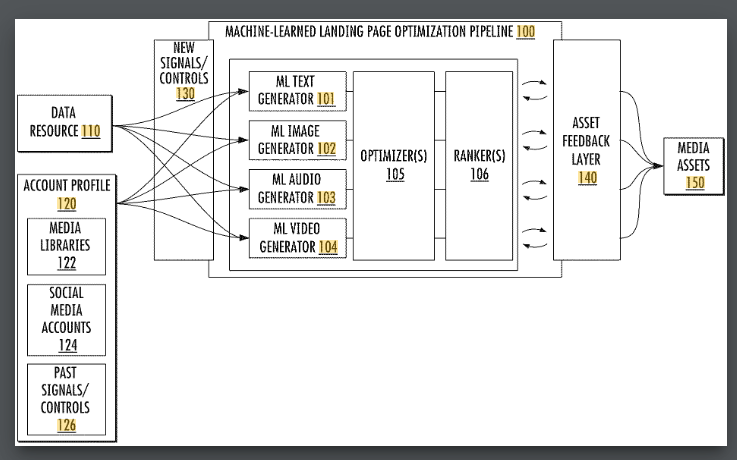
Image from Glenn Gabe’s post on X shows a system where Google takes a company’s existing content and rebuilds it using AI before showing it to a searcher.
What a Landing Page Scoring System Could Mean for Law Firms
If a system like this ever appeared in search results, the implications for law firms would be significant.
The patent references a landing page score, which suggests Google may evaluate whether a firm’s page answers a user’s query effectively. If the page falls short, Google could present its own AI assembled version built from the firm’s content.
This raises several practical questions for law firm marketing teams.
Who controls messaging when the first page a potential client sees is generated inside Google?
How is branding preserved when the layout is created by Google instead of the firm?
What happens to analytics tracking or conversion paths when the first interaction occurs outside the firm’s website?
The concept follows a direction already visible in search results. AI Overviews summarize information directly on the results page rather than sending users to individual websites. An AI generated landing page would move further in that direction by reorganizing a firm’s own content into a format Google believes answers the query.
The patent does not confirm that Google plans to launch this system. It simply shows that engineers are exploring ways to evaluate and restructure webpages based on search intent.
How Law Firm Websites Should Prepare for What Comes Next
Even though this system is only described in a patent, the idea highlights a pattern in how search technology continues to develop. Search engines reward pages that answer questions clearly and organize information in a way that helps users quickly understand a topic.
Law firms with well structured practice area pages, strong internal linking, structured data, and detailed legal content will be in a stronger position if systems like this ever appear. Sites that rely on thin or generic content may struggle if search engines determine their pages do not provide enough value.
Our own research into AI search behavior points to the same conclusion. Firms that invest in strong SEO foundations continue to earn visibility and engagement even as search interfaces change.
At TSEG, we build and optimize law firm websites with these realities in mind. Our team focuses on clear site structure, authoritative legal content, and technical SEO that helps search engines understand exactly what a firm offers. When those elements are in place, law firms remain competitive even as Google introduces new ways of presenting information in search results. If you want to know whether your website is ready for what comes next, contact us today.


