Why Law Firm AI Mentions Rely on Solid Traditional SEO
Posted on Friday, January 16th, 2026 at 2:43 pm

AI Overviews Are Built on Core Search Signals
For most law firms, it is easy to assume that Google’s newer AI features like AI Overviews and AI Mode are rewriting how search works. According to Google’s Robby Stein, that assumption misses what is actually happening behind the scenes.
In a recent interview on CNN’s Terms of Service podcast, Stein explained that Google’s AI responses rely on the same ranking systems that have powered traditional search for years. He noted that Google has integrated its core search signals directly into these AI experiences, reinforcing that trust, relevance, and authority still determine what surfaces in results.
That position aligns with what Google said when it introduced the Search Generative Experience in May 2023. At the time, Google stated that AI-generated answers would continue to use its existing ranking systems to reduce inaccuracies and factual errors. The technology changed, but the foundation held sturdy.
Put simply: AI Overviews don’t bypass SEO. They actually depend on it. Google’s AI still looks for content that answers real questions, comes from credible sources, and reflects demonstrated experience. Firms that already invest in quality content and sound technical SEO are not being sidelined by AI. They are supplying the signals these systems rely on.
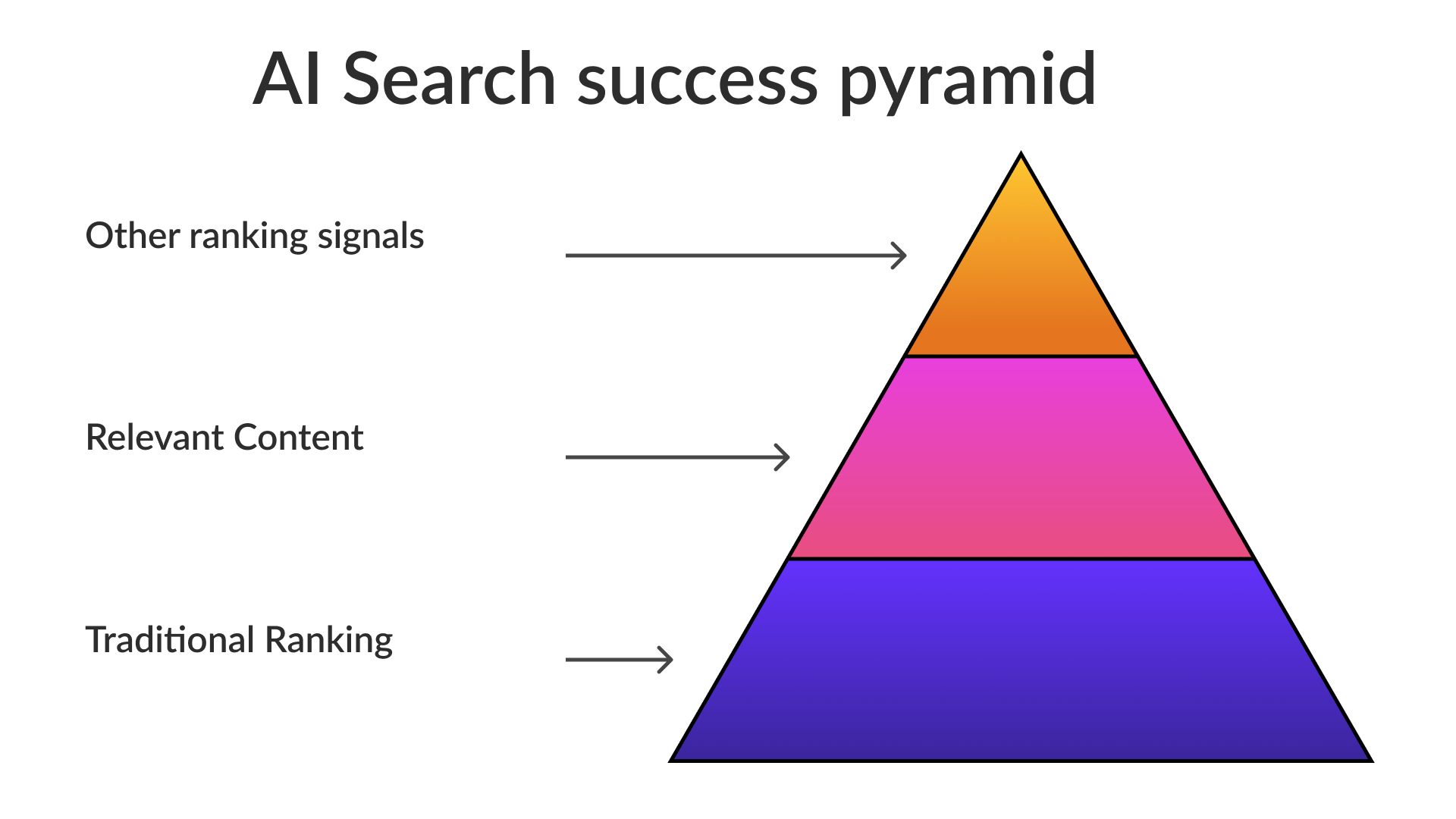
Chart by ZipTie
How Google Flags and Fixes AI Mistakes
No system gets everything right, and Google knows that. When its AI responses are wrong, the company refers to it internally as a “loss.” This triggers a structured review process similar to how Google has always handled bad search results.
Robby Stein explained that when an AI Overview links to the wrong source, the team traces the error. Sometimes the link mentioned a different brand in passing. Other times, an overview conflicts with the official product description. Even small inconsistencies can trigger deeper investigation on Google’s side.
These mistakes are taken seriously. Each one becomes part of the system’s learning process. Engineers analyze the cause, adjust how links are selected, and retrain the model to avoid repeating it. Over time, this builds a smarter system that can make better choices across thousands of related queries.
For law firms, this reinforces why clear, trustworthy and consistent content still holds significant value. A law firm website with multiple pages that blend topics or outdated pages that create confusion are more likely to be flagged or ignored by AI responses. Websites with structured and optimized pages that deliver straight answers to direct questions are more likely to be featured.
How Google Trains AI to Think Like a Search Engine
Google’s AI responses are far from a guessing game. They are trained using decades of search data to mimic what people have historically found useful. That includes the search query typed, which links users clicked, which answers they trusted, and which pages they ignored.
Robby Stein confirmed that Google uses a mix of reinforcement techniques to train its AI models, including the “loss” marks mentioned above. The team then investigates why the model chose that answer, examines the source, and adjusts its training process to reduce similar errors in the future.
The training also includes a variety of inputs. AI systems are shown large volumes of data, evaluated against quality benchmarks, and refined based on real-world use. Inaccurate responses are not just removed. They help improve how the entire model handles related questions.
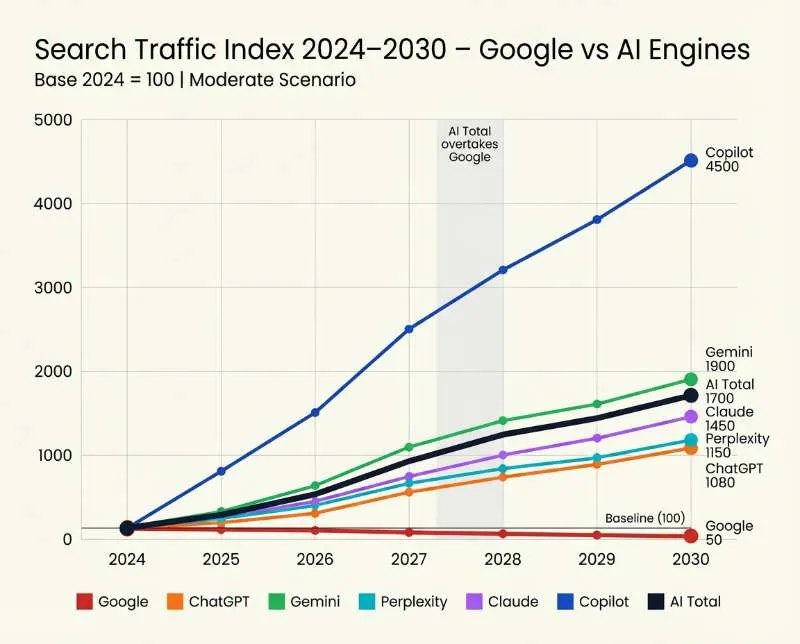
Google’s approach reflects a long-standing priority: showing information that people actually find helpful. That doesn’t change with today’s AI rush. For law firms, it means that content that performs well in traditional search is still the content most likely to be found and trusted by these AI tools.
Graph by Growth Engines
What Law Firms Should Be Doing Right Now
Despite the hype around AI Overviews, the fundamentals of SEO have not changed. Google’s AI still relies on the same core signals it has used long before Gemini was a thing. That includes authority, clarity, and consistency. Every attorney website with strong legal content should already reflect those qualities.
Even though you can write hundreds of pages with a single prompt, this is the time to focus on depth and quality instead of sheer volume. AI systems are designed to seek out answers that best match the questions users are asking. Generic blog posts, keyword stuffing, and shallow content are guaranteed to be ignored.
Focus on creating pages that give clear, useful answers to legal questions most closely related to your practice. Content should be easy to read, supported by real examples or citations, and tailored to user intent. Avoid combining unrelated topics on the same page, since that can make it harder for both users and AI to understand.
If there’s one standout takeaway from the past year, it’s that site structure matters greatly. Your most helpful pages should be easy to find, clearly linked, and formatted in a way that makes sense. The easier it is for users to find information, the easier it is for Google’s AI to recommend it.
Want to know whether your current AI search strategy is actually performing? Here’s how to find out.
Why This Matters for Legal Marketing
Google’s investment in AI has not made SEO irrelevant. If anything, it has raised the standard for what quality looks like. AI Overviews are designed to surface the best possible answers, and that means law firms that create reliable, relevant content are still in the running to appear at the top.
The difference now is that AI models are more selective. They are not just pulling from the first result on the page. They are pulling from the content that has consistently earned trust, solved real problems, and demonstrated experience with the subject matter.
TSEG stays ahead of these changes. We understand how Google’s AI uses ranking signals and how that connects directly to your firm’s visibility. Whether it is refining your site’s structure, updating outdated content, or building new pages designed around search intent, we help trial attorneys stand out where it counts.
If your firm is ready to take advantage of how AI is reshaping search results, reach out today and we can help you do it the right way.


