ChatGPT Recommended Brands Found 2.5 Times More Likely to Receive Site Visits
Posted on Thursday, June 25th, 2026 at 2:07 pm
An AI Mention Can Start the Client Search
A Similarweb analysis found that brands recommended by ChatGPT are 2.5 times more likely to receive a website visit within seven days than brands that don’t receive a recommendation.
The study examined US desktop behavior in finance, travel, and beauty. Legal services were not included, so attorneys should view the findings as general consumer behavior pattern rather than direct proof of how people choose law firms.
A prospective client could ask ChatGPT to identify attorneys who handle a particular matter in a specific city. After seeing a firm name, that person may search them on Google, read attorney biographies, compare services, and consult outside sources before making contact.
Branded Search Accounted for 55.9% of Visits
Among users who visited a recommended brand, 55.9% arrived through a branded search. Many people saw the brand in ChatGPT and then searched for it by name instead of clicking directly from the AI answer.
A search for a law firm name can display the firm’s website, Google Business Profile, attorney directories, client reviews, news coverage, and paid search ads. Those results help prospective clients confirm whether the firm fits their needs.
Law firms should examine searches for the firm name, office names, common abbreviations, and individual attorneys. Page titles, profile details, addresses, phone numbers, and practice descriptions should agree across every prominent result. Outdated information or an incomplete attorney profile can create uncertainty before the prospect reaches the website.
Paid search also deserves attention. Competitors can place advertisements above the organic result when someone searches for another firm by name. Reviewing impression share and competitor activity can help a firm decide whether a branded paid search campaign belongs in its marketing plan.
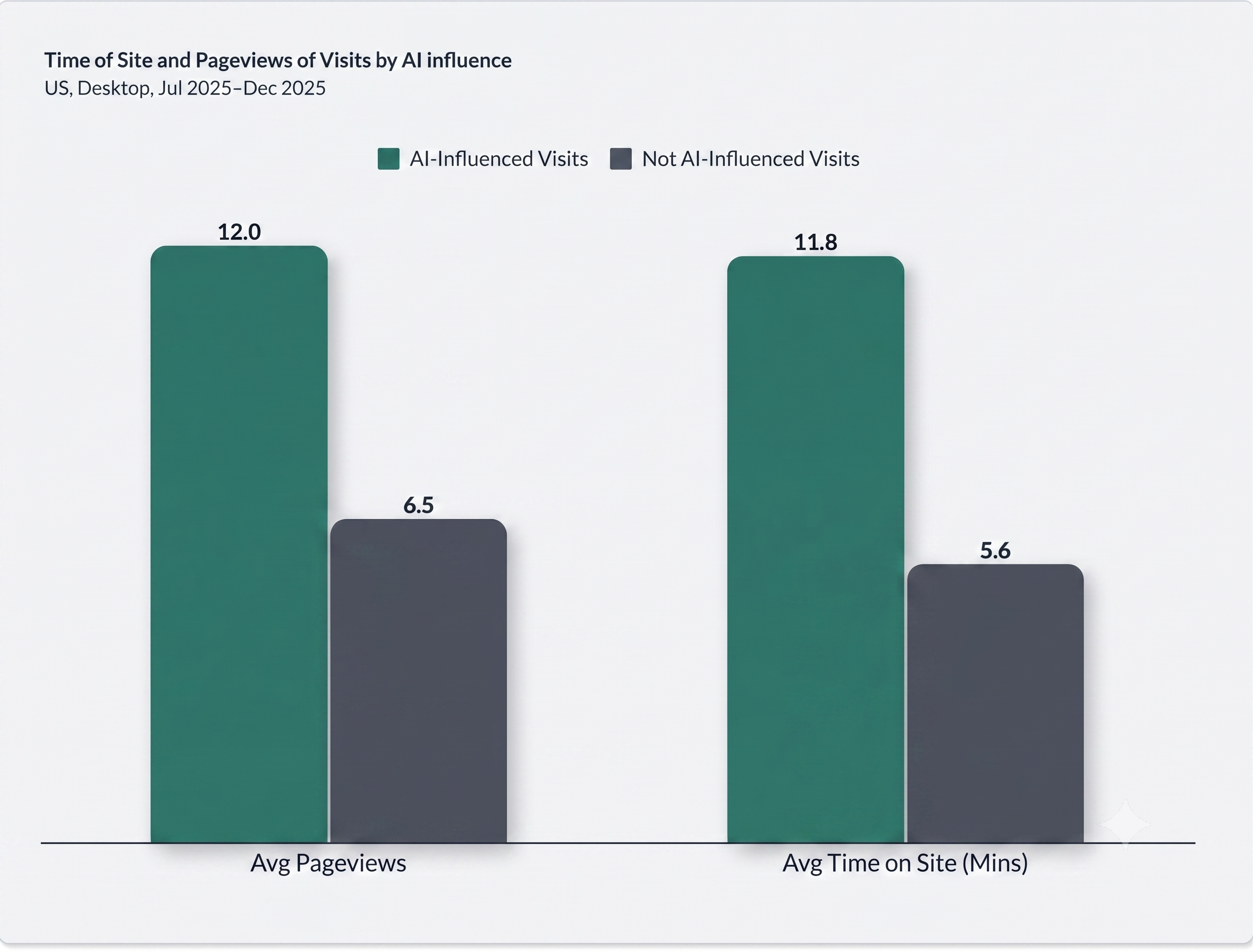
AI-Driven Engagement: New data from late 2025 highlights a stark contrast in user behavior, showing that AI-influenced visits yield nearly double the average pageviews (12.0 vs. 6.5) and more than twice the time spent on site (11.8 mins vs. 5.6 mins) compared to non-AI visits.
Recommended Brand Visitors Conducted More Research
Users connected to a ChatGPT recommendation viewed an average of 12 pages and spent about 11.8 minutes on the recommended website. Other visitors viewed 6.5 pages and stayed for 5.6 minutes on average.
Similarweb described the relationship as correlational. The study did not establish that the ChatGPT recommendation caused the longer visits.
On a law firm website, a longer research session may include perusing a practice page, attorney biography, case results, client reviews, office information, and ultimately a contact page. Each destination answers a different question about the firm and its ability to handle the matter.
Internal links should connect related pages without forcing readers to repeat their search. A truck accident page could link to the attorneys who handle those claims, related case results, information about insurance disputes, and the appropriate contact form.
Detailed content can also address the context people include in AI prompts. A personal injury firm might publish guidance about commercial truck crashes in Dallas. An estate firm could explain probate timing in Cook County. An employment firm could answer common questions about unpaid wages in California.
Measure AI and Search Together
AI referral traffic remains useful, but it cannot represent the entire client journey when people leave ChatGPT and conduct a separate search.
Reporting should combine several data sources. These may include visits from AI platforms, searches containing the firm name, Google Business Profile activity, paid search clicks, pages viewed, calls, form submissions, and qualified inquiries.
Firms can also monitor a set of prompts based on actual practice areas and markets. The prompt set might include case type, city, deadlines, and common client concerns. Repeating those checks can show how frequently the firm appears and which competitors receive recommendations.
That information should be reviewed beside business outcomes. An increase in AI appearances has limited value when it produces no growth in relevant website visits or qualified cases. Search and lead data provide the context needed to judge whether the activity supports the firm’s goals.
Attribution will remain imperfect. A prospect could encounter a firm through ChatGPT, search its name days later, read several pages, and call from a different device. Marketing reports should acknowledge those gaps rather than assigning every inquiry to a single source without adequate evidence.
Turn AI Awareness Into Qualified Case Inquiries
ChatGPT recommendations can introduce prospective clients to a law firm, but the rest of the search experience determines whether that awareness leads to contact. Accurate branded results, detailed legal content, connected website pages, and complete reporting give firms a better opportunity to earn the inquiry.
At TSEG, we help law firms assess how their names and attorneys appear in AI answers and search results. We connect that research with SEO, paid search, local search, content planning, and conversion analysis. Contact our team today to see how we can identify gaps, protect branded demand, and build a marketing strategy focused on qualified case opportunities for your firm.


