Google May 2026 Core Update Shakes Up Law Firm Search Rankings
Posted on Wednesday, June 3rd, 2026 at 11:12 am
Ranking Turbulence Settles After Weeks of Volatility
Google has officially completed its May 2026 core update after several weeks of noticeable ranking movement across industries. Early data showed sharp swings in visibility, with some sites gaining ground while others lost significant positioning. The legal sector experienced substantial movement, particularly in highly competitive practice areas such as personal injury, criminal defense, and employment law.
Notably, many tracking platforms reported another spike in ranking volatility during the final 24 hours before the rollout concluded. While the update has technically finished, Google advised site owners to allow roughly another week for rankings and performance data to stabilize before making comparisons or implementing major optimization decisions.
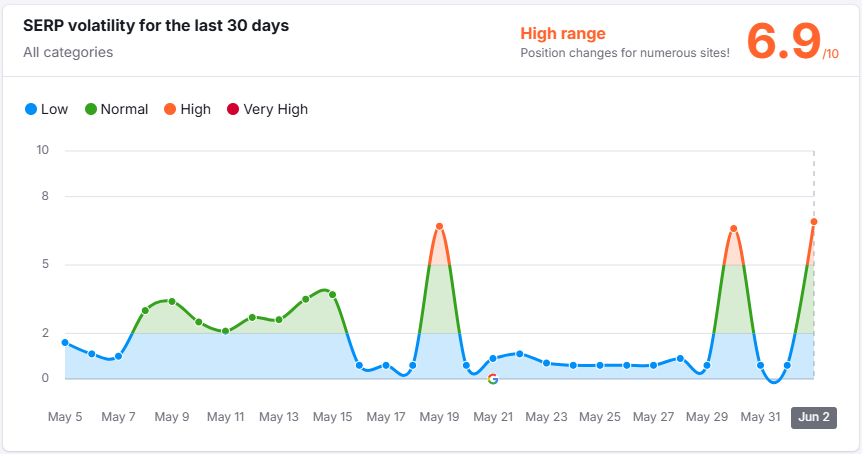
Chart from SEMrush
As with previous core updates, Google did not provide specific details about what changed within the algorithm. The company instead reiterated its standard guidance around creating helpful, trustworthy content that demonstrates expertise and serves users effectively. Those recommendations closely align with the strategies we’ve been encouraging firms to adopt for months.
What Separated High Performers From Declining Sites
Sites that improved visibility during this update shared several common characteristics. They demonstrated clear topical focus, transparent authorship, and content supported by real legal experience. In many cases, pages were written or reviewed by attorneys and provided detailed answers to questions potential clients actively research before contacting a firm.
Google’s broad guidance surrounding core updates continued to emphasize principles that appeared reflected in many of the winning sites. Successful firms focused on producing original content, providing meaningful information beyond what users could find elsewhere, maintaining strong expertise signals, and ensuring pages served a clear purpose for visitors. Firms that consistently invested in these areas generally weathered the update more effectively.
By contrast, many declining sites relied heavily on thin content, aggressive optimization tactics, or large collections of nearly identical pages. Practice area pages created primarily to target keywords without adding meaningful value struggled in many markets. Sites with weak differentiation, limited attorney involvement, or content that lacked depth frequently experienced visibility losses.
User engagement also appeared to remain an important factor. Pages that kept visitors engaged and provided comprehensive answers often performed better than pages built around basic definitions or generalized information.
Where Law Firms Should Focus After the Rollout
With the rollout complete, law firms should resist the urge to make immediate changes based on early data. As we mentioned earlier, Google’s recommendation is to wait approximately one week before comparing performance metrics and making adjustments. Allowing rankings to settle provides a more reliable foundation for analysis.
Once data stabilizes, firms should review changes across key practice area pages, attorney profiles, and high-value content assets. Identifying patterns among gains and losses often reveals more useful insights than focusing on individual keyword movements. Firms should prioritize improvements on pages that generate meaningful business results rather than attempting sitewide revisions all at once.
Attorney attribution, content quality, internal linking, and local search visibility should remain ongoing areas of focus. These elements continue to support long-term performance regardless of individual algorithm updates.
What This Update Means for Law Firm Growth
The May 2026 core update reinforces a trend that has become increasingly clear across legal search in recent months. Firms that publish original, experience-driven content and demonstrate genuine expertise continue to place themselves in stronger positions for sustained visibility. Meanwhile, firms that depend on templated pages and outdated SEO tactics face increasing challenges as Google’s systems become better at evaluating content quality.
While the specific details of this update remain unknown, the broader direction remains consistent. Firms that invest in useful content, transparent expertise, and a better user experience are more likely to earn lasting search performance.
At TSEG, we closely monitor updates like this and analyze how they affect law firms across competitive practice areas. Our team works directly with attorneys to strengthen content quality, improve site architecture, and identify opportunities that align with Google’s long-term guidance. As algorithm updates continue to reshape legal search, we help firms separate short-term fluctuations from meaningful trends and build strategies that support sustainable growth. For any law firm in need of help with their website rankings after the May 2026 core update, reach out to TSEG and start implementing a plan to get more organic searches in your SEO market.


