Google Reveals How AI Search Is Reshaping Legal Search Behavior
Posted on Friday, May 8th, 2026 at 10:30 am

Users Are Asking Search Engines More Detailed Legal Questions
Google recently shared new information about how artificial intelligence is influencing the way people search online. During a recent podcast discussion, Google Search representatives Martin Splitt and Nikola Todorovic discussed how users are becoming more comfortable asking detailed questions through AI search tools.
That behavior is changing the structure of search queries and the type of content people expect to find.
Instead of relying on short keyword phrases, users are now entering complete questions with context, background information, and specific concerns. Search engines are responding with more conversational answers that attempt to address the full request.
For attorneys, this trend affects how potential clients research legal issues before contacting a law firm.
Someone searching for legal help after an accident may now ask questions like:
- “What should I do after a trucking accident caused by a distracted driver in Texas?”
- “How long can a wrongful death case take if liability is disputed?”
- “Can I recover compensation after a construction accident if I was partially responsible?”
These searches contain much more detail than traditional keyword searches. They also reveal stronger intent and a clearer understanding of the legal issue involved.
Google Says AI Search Builds Answers From Multiple Searches
During the discussion, Google explained that AI search systems still rely heavily on traditional search infrastructure.
Elizabeth Reid explained that users are becoming more comfortable asking highly detailed questions through AI search experiences. According to Reid, users are beginning to trust search engines with more complicated requests than they would have searched a few years ago.
Even when a user submits one long question, Google may separate that request into several smaller searches before generating a response. SEO professionals sometimes refer to this process as fan out querying.
Longer Queries Still Depend on Keyword Relevance
Some marketers have suggested that keywords no longer matter in AI search. Google’s comments point in a different direction.
Keywords still help search systems understand topics and intent. The difference is that those keywords now appear within much larger and more detailed search sessions.
For example, a user asking about a workplace injury may include several legal concepts in one search:
- Workers compensation
- Employer negligence
- Lost income
- Third party liability
- Medical expenses
Google can identify each topic separately while building a response.
Because of that, keyword research still plays an important role in law firm SEO. Attorneys should continue targeting relevant legal topics while also creating content that answers complete client questions in plain language.
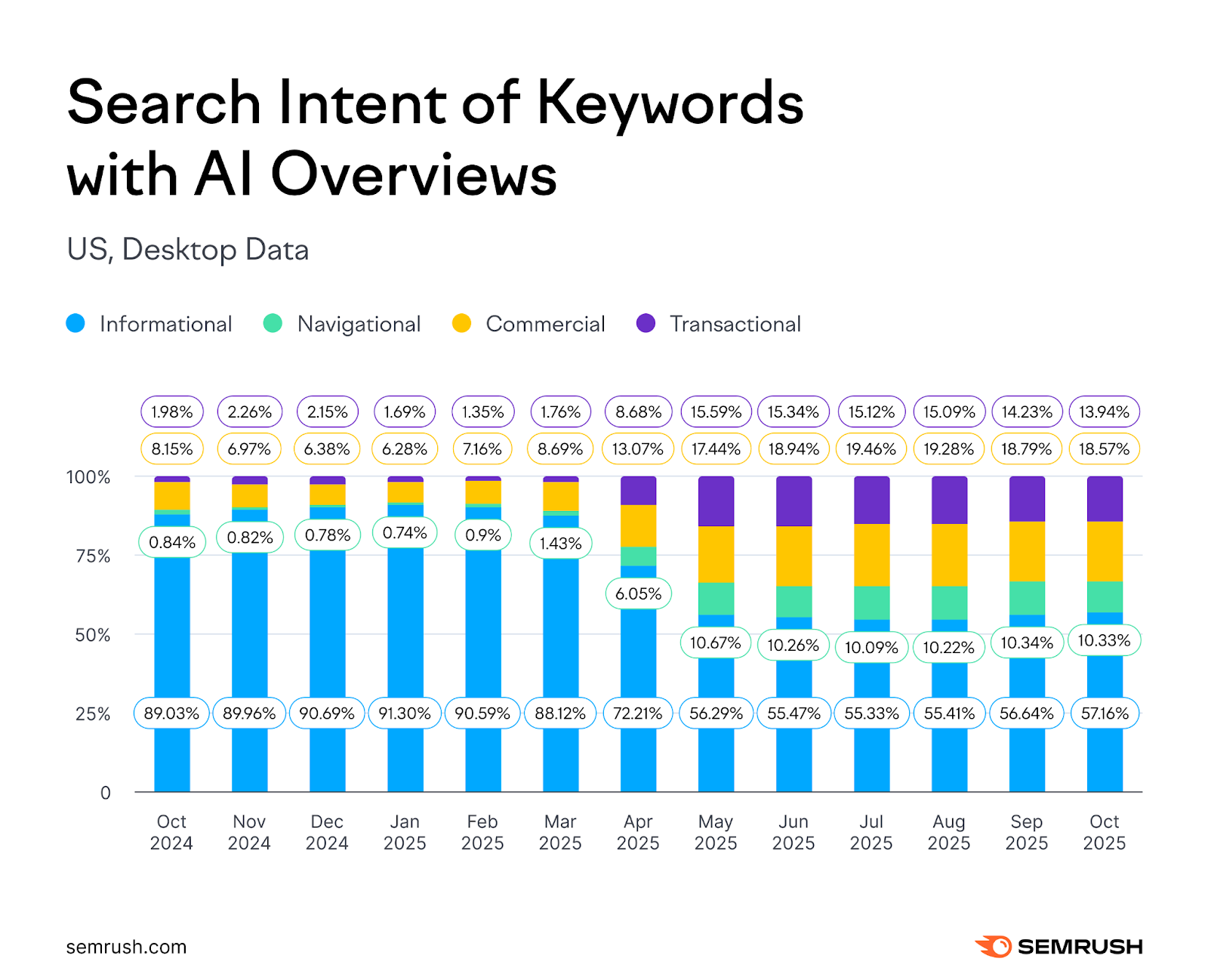
Image by Semrush shows informational search intent still leads AI Overviews, while commercial and transactional queries continue becoming more common within AI driven search results.
Thin Legal Content May Struggle in AI Search Results
Many law firm websites still rely on short practice area pages with limited detail. That approach may become less effective as users ask more advanced legal questions through AI assisted search tools.
Detailed content gives search systems more information to work with while also helping potential clients understand legal processes.
Strong legal content often addresses:
- Insurance disputes
- Liability concerns
- Filing deadlines
- Compensation questions
- Legal procedures
- Case timelines
- Common client concerns
- State laws and regulations
Google’s comments suggest users increasingly view search as a research tool instead of a directory for finding business websites.
Law firms that publish organized and informative legal content may gain more visibility across both traditional search rankings and AI generated responses.
Higher Expectations Are Changing Legal Marketing
AI assisted search is raising expectations for website quality and usefulness.
Users expect direct answers and practical information connected to real legal situations. Generic service pages with little substance may struggle to compete against more detailed resources.
Many legal marketers are also questioning whether AI generated content can consistently earn trust with potential clients, especially in areas where credibility and accuracy strongly influence decision making.
Law firms should focus on building content that demonstrates experience, answers common legal concerns, and explains legal topics clearly.
A stronger legal marketing strategy now includes:
- Detailed practice area coverage
- Accurate local SEO
- Educational legal resources
- Technical website improvements
- Consistent content publishing
- Clear topic organization
Firms that continue improving website quality may be in a stronger position as AI search tools become more common.
What This Means for Law Firm SEO Moving Forward
Google’s recent comments show that search behavior is becoming more conversational and more detailed.
Potential clients are asking broader legal questions before contacting an attorney. Search engines are attempting to answer those questions by pulling information from multiple online sources.
Law firms should focus on publishing clear, organized, and informative content that addresses real client concerns. Short pages built around isolated keyword phrases may no longer provide enough depth for modern search behavior.
We help law firms improve online visibility through SEO, technical website improvements, and legal content strategies built for modern search behavior. As AI search continues expanding across Google Search, we help firms create stronger websites that support both traditional rankings and AI driven search visibility.
Contact us today to learn how we can strengthen your law firm’s search presence and help your website compete in modern AI search results.


