Study Shows AI Driven Traffic Brings Lower Engagement on Law Firm Websites
Posted on Friday, April 24th, 2026 at 10:30 am

When More Clicks Create a False Sense of Growth for Law Firm Websites
Artificial intelligence is changing how people find legal information online. Law firm websites are already seeing the impact, and recent data from Ahrefs highlights a pattern that deserves attention. Traffic from AI platforms can look strong in reports, yet the behavior behind those visits often tells a different story.
For years, firms have treated rising traffic as a sign of progress. More visitors meant more chances to generate leads and sign cases. That connection becomes less reliable as new referral sources gain traction. Tools like ChatGPT, Perplexity AI, and Microsoft Copilot are sending users to law firm websites, but those users do not behave the same way as traditional search visitors.
Search engines such as Google have suggested that AI-related clicks may bring in more qualified users. The Ahrefs research raises doubts by showing that many of these visitors leave quickly and interact with fewer pages.
What the Data Reveals About AI Traffic
Ahrefs reviewed traffic across more than 80,000 websites to compare AI referrals with traditional search. The differences in behavior are consistent.
Visitors from AI platforms are more likely to leave after viewing a single page. Bounce rates are higher than both search traffic and overall site averages. That reduces the number of opportunities to move a potential client toward a consultation page.
Page depth also separates these sources. Search visitors average more than five pages per visit, while AI users stop closer to four. That gap reflects less interest in reviewing attorney profiles, case results, and supporting content.
Session activity follows the same pattern. AI users tend to interact less overall, even when they spend slightly more time on a page. Many arrive with a specific question and exit once they feel it has been answered.
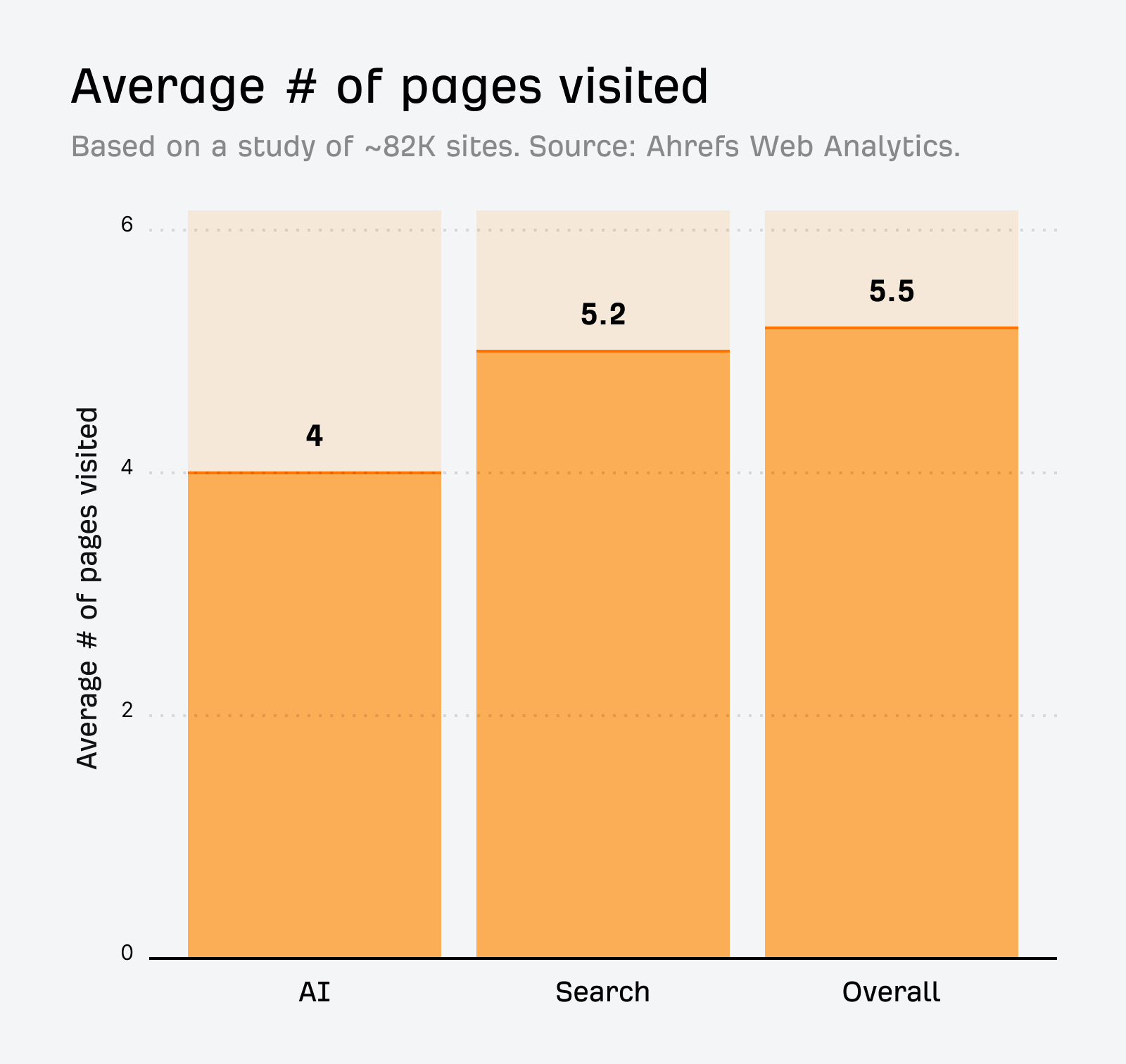
Image by Ahrefs shows a drop in engagement from AI-driven traffic, with users viewing an average of just four pages per visit compared to more than five pages from search and across all traffic sources.
Why Engagement Still Influences Signed Cases
Traffic only has value when it leads to action. For law firms, that includes phone calls, form submissions, and consultations that turn into signed cases.
Search visitors often review multiple sections of a site before reaching out. They examine practice areas, attorney backgrounds, and prior results. This behavior shows that they are comparing options.
AI referrals tend to follow a shorter path. A user lands on one page and leaves without exploring further. When that happens, important details about the firm may never be seen. Testimonials, case outcomes, and experience all contribute to building trust, and those elements require time to absorb.
Legal matters rarely lead to immediate decisions. Someone researching a claim or dispute often needs reassurance before making contact. Engagement supports that process and increases the likelihood of a qualified inquiry.
Conversion Rates Need Context, Not Assumptions
The Ahrefs study found that AI-driven traffic converts at a rate about 12% higher than traditional search. That figure can be misleading without context.
A higher conversion rate may reflect a smaller group of users who arrive with a specific goal. Some click through only when they are ready to act, which can raise conversion metrics without improving overall results.
Lead quality also matters. A form submission or phone call is only the first step. If AI traffic produces inquiries that do not align with a firm’s practice areas, intake teams may spend more time filtering than signing cases.
Traditional search still delivers a larger volume of users who spend more time evaluating their options. That process often leads to stronger cases and better long term outcomes.
How Law Firms Can Turn Data Into Growth
AI platforms will continue to influence how people search for legal help. Law firms need a clear understanding of how each traffic source contributes to signed cases, not just overall visit counts.
We work directly with law firms to evaluate where traffic originates and how users behave once they arrive. We connect marketing efforts to real outcomes by tracking qualified leads, intake performance, and case value.
Changes in user behavior do not stop at the website visit. They continue into the intake process, where expectations shaped by tools like ChatGPT influence how potential clients ask questions and evaluate their options during early intake conversations.
Our team helps refine content, improve user experience, and identify which channels consistently produce strong results. As AI traffic increases, this approach allows firms to avoid misleading trends and focus on performance that can be measured.
Contact us today to see how your traffic is translating into real case growth.


