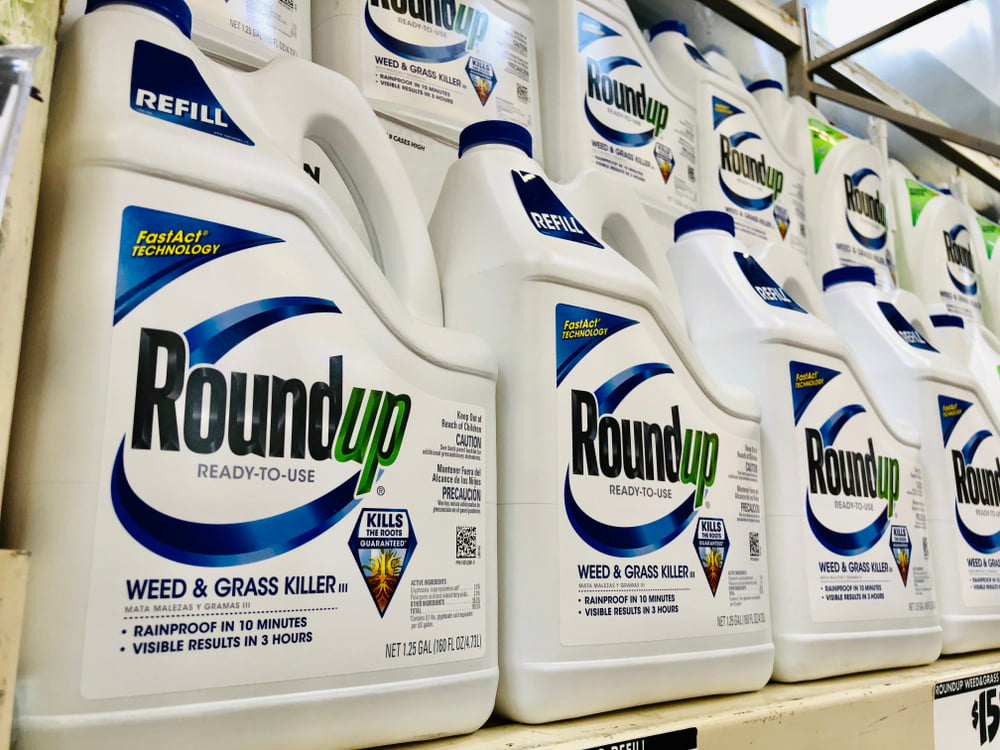
Roundup, manufactured by Monsanto, is the most commonly used herbicide. It is used by agricultural professionals such as farmers, gardeners, maintenance workers, and many others as an all-purpose weed killer. Nearly 300 million pounds of Roundup are used on crops worldwide each year. For several decades, Monsanto has sold Roundup knowing that glyphosate causes cancer. Rather than warning consumers about cancer risks, Monsanto chose to secure the profit of Roundup’s sales. Today, Monsanto continues to deny claims that Roundup is carcinogenic, insisting that Roundup is safe. Past advertising for the herbicide included messaging that the product is “safer than table salt.”

REQUEST A FREE CONSULTATION
Get More Leads & Retainers With TSEG
In early 2015, IARC (International Agency for Research on Cancer) concluded Monsanto’s Roundup herbicide is “probably carcinogenic to humans.” The cancer most associated with exposure to glyphosate is non-Hodgkin lymphoma.
Symptoms of Non-Hodgkin Lymphoma:
- Swollen, painless, lymph nodes in groin, armpits, or neck
- Chest pain
- Difficulty breathing
- Coughing
- Abdominal pain/swelling
- Fatigue
- Sudden weightloss
- Night sweats
- Fever
Now Is the Time to Acquire Roundup Cases
- Lowest costs. Case costs in 2020 are the lowest we’ve seen.
- Reach a bigger audience. Stay-at-home conditions due to COVID-19 mean more people are watching TV and interacting with digital content. Now is an ideal time to reach your target audience.
- Costs to acquire cases have gone down. The increased viewership, in addition to reduced rates, bonus airings, and discounts, has led to reduced costs to get signed cases.
How TSEG Can Help
At TSEG, we manage lead-generation digital advertising campaigns to help your law firm on a wide array of platforms, including Google, Facebook, and Hulu. We will help you deliver your message about Roundup lawsuits to the potential clients and measure the return-data. The data that comes back from the ads is useful even if it does not convert to a lead. After we analyze the data, we will discover which copy, creative, and platform works best for your unique firm and message. We lever your advertising dollars in the most effective way possible, helping you to secure as many leads as you can. Our data-driven approach helps us deliver ½ to ⅓ the lead generation costs of our competitors.
In 2020, people are accustomed to the abundance of information on the internet, and they do plenty of research when deciding which firm to hire. Potential clients are no longer limited to the information that firms choose to advertise. Search engines are the tools used to seek out this information. Your firm’s search rankings will allow users to access key information like your location and customer reviews. A strong organic presence in search engines dramatically increases the chances people will pick your firm to take their Roundup case.
TSEG can also help you launch PPC, or Pay-Per-Click, campaigns. PPC helps you secure high placements on Google’s results page. PPC placements are at the top of the results page, above the maps and organic results. TSEG can help you optimize your PPC campaign so that you lower your costs while also reaching plenty of users.
Call us at (512) 894-8621 today
TSEG, a division of Cloud[8]Sixteen, Inc., has been providing SEO services for law firms since 2007. TSEG will work closely with you to effectively spotlight your firm through your digital marketing campaign. We’ll help you identify and sign emerging mass tort leads. Contact us online or call (512) 394-7234 to learn more.
Roundup Lawsuit Updates 2026
August 2026
The Missouri Circuit Court overseeing the Roundup class settlement granted a joint motion by Bayer’s Monsanto unit and plaintiffs’ attorneys and rescheduled the final approval hearing for September 14.
The proposed $7.25 billion class settlement is for U.S. claims from those who were exposed to the weedkiller Roundup and developed non-Hodgkin lymphoma.
The court had previously scheduled an August 19 hearing to consider approving the settlement, but both sides said they needed more time.
Bayer is reviewing requests to opt out of the settlement, and it said that some people want to rejoin the deal after a recent Supreme Court decision undercut one of the central legal claims in the Roundup cases. The high court held that Roundup users cannot bring state law failure to warn claims because federal regulations have found a cancer link unlikely and do not require a warning label.
“The Court’s order is a positive development as it will give the parties and the Class Administrator approximately three additional weeks to process opt-out revocation requests that have been received by the Administrator following the Supreme Court’s recent Durnell decision, and to resolve opt-out invalidity challenges as quickly as possible,” Bayer said in a statement.
The company said it is confident that the settlement is “fair to all parties and warrants final approval.”
Bayer is facing approximately 65,000 claims in U.S. state and federal courts from plaintiffs who say they developed non-Hodgkin lymphoma and other forms of cancer after using Roundup at home or on the job.
July 2026
Bayer is seeking to put an end to federal litigation alleging that its Roundup weedkiller causes cancer. The move comes after last month’s U.S. Supreme Court ruling in favor of the company.
The high court held that Roundup users cannot bring state law failure to warn claims because federal regulations have found a cancer link unlikely and do not require a warning label.
The court set aside a $1.25 million verdict for a Missouri man who alleged Roundup caused his non-Hodgkin lymphoma, finding that federal pesticide law requires uniform labeling and prevents states from imposing additional warning requirements once the EPA has approved the label.
Based upon this ruling, Bayer is now asking U.S. District Judge Vincent Chhabria to dismiss the nearly 4,000 lawsuits in the consolidated Roundup litigation in the Northern District of California. The judge held a status conference for both sides to discuss the impact of the Supreme Court ruling on the remaining cases.
The company has said the ruling is unlikely to affect more than 60,000 similar claims pending in state courts, most of which it is seeking to resolve through a proposed $7.25 billion settlement.
A Missouri federal judge has sent that settlement proposal back to Missouri state court, rejecting an effort by settlement objectors to move the case into federal court and potentially into the California Roundup MDL. Judge Henry Autrey ruled that non-defendant objectors had no authority to remove the case to federal court.
June 2026
The U.S. Supreme Court handed down a ruling siding with Bayer in its appeal aimed at blocking thousands of lawsuits linking the weedkiller Roundup to cancer.
In a 7-2 ruling, the high court found that Roundup cannot face failure-to-warn lawsuits in state courts because federal regulations have found a cancer link unlikely and do not require a warning label.
In Monsanto Company v. Durnell (Case 24-1068), Bayer (owner of Monsanto) asked the Court to consider shielding the company from these lawsuits, arguing that EPA laws kept it from adding a stronger warning to Roundup’s label about the potential dangers of glyphosate.
The EPA, which regulates pesticides, has not determined that Roundup poses a cancer risk and does not require a label saying it does.
The appeal involves a case from Missouri, in which a jury awarded $1.25 million to John Durnell, who alleged that years of spraying Roundup on a garden caused him to develop non-Hodgkin’s lymphoma. A state appeals court upheld that decision.
The first formal objection to the proposed $7.25 billion Roundup class action settlement was filed in a state court in St. Louis, Missouri.
Attorneys for 13 cancer patients asked the court not to approve the settlement and said the dispute should be moved to federal court. They called the proposed deal the product of “collusion” between Bayer and class action lawyers who stand to receive $675 million in attorneys’ fees.
They contend the settlement was not the product of a genuinely adversarial lawsuit, but instead a coordinated effort between Monsanto and the named plaintiffs to obtain court approval of a nationwide liability resolution.
The settlement, which received preliminary approval from Missouri State Court Judge Timothy Bayer, is for U.S. claims from those who were exposed to the weedkiller Roundup and developed non-Hodgkin lymphoma. Bayer is scheduled to consider final approval in early July.
The objection states that multiple aspects of the proposed settlement are unconstitutional and not representative of most plaintiffs. Other complaints include inadequate notice to class members, a cumbersome procedure to opt out of the deal, jurisdictional challenges and varying class action treatment for thousands of individuals.
The judge overseeing the settlement deal will have to review all objections and determine if the proposed settlement is fair to all claimants. If the judge finds the objections warranted, a renegotiation of the settlement deal may be required.
May 2026
The U.S. Supreme Court heard oral arguments in an appeal by Bayer aimed at blocking thousands of lawsuits linking the weedkiller Roundup to cancer.
In Monsanto Company v. Durnell (Case 24-1068), Bayer (owner of Monsanto) is asking the Court to consider shielding the company from these lawsuits, arguing that EPA laws kept it from adding a stronger warning to Roundup’s label about the potential dangers of glyphosate.
The appeal involves a case from Missouri, in which a jury awarded $1.25 million to John Durnell, who alleged that years of spraying Roundup on a garden caused him to develop non-Hodgkin’s lymphoma. A state appeals court upheld that decision.
Monsanto argues that state law claims like Durnell’s should have been preempted by the Federal Insecticide, Fungicide, and Rodenticide Act, which requires manufacturers to register pesticides with the EPA before selling them, which Monsanto did.
The justices will consider whether the EPA’s approval of Roundup without a cancer warning should rule out the state court claims. Plaintiffs argue that state law failure to warn claims remain a vital tool to hold companies accountable when a product is sold without adequate warnings despite evidence of cancer risk.
April 2026
All Roundup-related lawsuits brought in Missouri by class members against Bayer are put on hold after Bayer’s proposed $7.25 billion class settlement received preliminary approval from Missouri State Court Judge Timothy Bayer. The settlement is for U.S. claims from those who were exposed to the weedkiller Roundup and developed non-Hodgkin lymphoma.
Members of the proposed class have been officially notified and will have the option to file objections or opt out of the proposed settlement by June 4.
Boyer declined a motion to delay preliminary approval but said that any objectors can still express their concerns. The court will hold a fairness hearing on July 9, after which the judge will decide whether to give final approval.
If the settlement is approved, individuals would likely receive between $10,000 and $165,000, depending on how they were exposed to Roundup and at what age they were diagnosed with cancer.
Under the settlement, Bayer is not admitting liability and maintains that the herbicide does not cause cancer.
March 2026
Missouri State Court Judge Timothy Boyer granted preliminary approval to a proposed $7.25 billion settlement to resolve thousands of lawsuits claiming Bayer’s Roundup weed killer causes cancer.
The deal was reached between Bayer and attorneys from six law firms representing a nationwide class of people who say exposure to Roundup and its active ingredient, glyphosate, caused their non-Hodgkin’s lymphoma.
Boyer stated, “The counsel involved in this negotiation have substantial and relevant past experience, and worked for eighteen months with a neutral, respected mediator at arm’s length. These efforts resulted in a settlement agreement envisioning the payment of a significant amount of money over an extended period.” But the judge said he would hear objections from other plaintiffs before deciding at a July hearing whether to grant final approval.
If the settlement is approved, individuals would likely receive between $10,000 and $165,000, depending on how they were exposed to Roundup and at what age they were diagnosed with cancer. The proposed settlement could resolve most of the approximately 65,000 remaining claims against Bayer.
It does not require Bayer to admit liability or wrongdoing.
February 2026
The U.S. Supreme Court said it would hear an appeal from Bayer to block thousands of state lawsuits alleging it failed to warn people that its Roundup weedkiller could cause cancer.
Bayer is asking the Court to consider shielding the company from these lawsuits, arguing that EPA laws kept it from adding a stronger warning to Roundup’s label about the potential dangers of glyphosate.
The appeal involves a case from Missouri, in which a jury awarded $1.25 million to John Durnell, who alleged that years of spraying Roundup on a garden caused him to develop non-Hodgkin’s lymphoma. A state appeals court upheld that decision.
Bayer says it is not liable for his injuries because the company adhered to the EPA’s labeling requirements for Roundup. Bayer has argued that a federal law enacted in the 1970s that gives the EPA power to regulate pesticides preempts state law claims like Durnell’s.
The justices will consider whether the EPA’s approval of Roundup without a cancer warning should rule out the state court claims.
Bayer disputes the cancer claims but has set aside $16 billion to settle cases. The Supreme Court will likely hear arguments in the Bayer appeal in the spring.
January 2026
There were 4,511 cases pending in the Roundup MDL in the Northern District of California at the start of January, a total that remained relatively unchanged from the previous month.
In California, an appeals court upheld a $28 million verdict awarded to a man who developed non-Hodgkin’s lymphoma after using Roundup for over two decades. Monsanto had appealed the 2023 judgment, which resulted in $7 million in economic damages in $21 in punitive damages.
The lawsuit alleged Monsanto violated state law that should have required the company to include a label warning consumers of an increased cancer risk from the product. Monsanto contended that the failure-to-warn claims are barred by the Federal Insecticide, Fungicide, and Rodenticide Act.
Regulatory Toxicology and Pharmacology retracted a landmark study published 25 years ago that was used to defend the safety of glyphosate, the key ingredient in Roundup. The journal cited undisclosed financial ties to Monsanto, saying that the study’s authors relied heavily on the company’s unpublished research rather than independent data.
December 2025
The Trump Administration is backing Bayer in its effort to limit thousands of lawsuits alleging that the company’s Roundup weedkiller causes cancer.
U.S. Solicitor General D. John Sauer filed a brief urging the U.S. Supreme Court to grant review to Bayer on a petition that could end the product-liability lawsuits over Roundup. Sauer sided with the company’s position that the federal law governing pesticides preempts lawsuits that make claims over the products under state law.
Bayer petitioned the nation’s highest court to hear its appeal of a lower court’s decision in Missouri to uphold a $1.25 million verdict awarded by a jury to a plaintiff diagnosed with non-Hodgkin’s lymphoma he attributed to his exposure to Roundup. Bayer, which purchased Monsanto in 2018, is facing lawsuits in state and federal courts. alleging that exposure to Roundup and glyphosate caused people cancer.
Sauer contended that the EPA has repeatedly determined that glyphosate is not likely to be carcinogenic in humans, and that the agency has repeatedly approved Roundup labels that did not contain cancer warnings.
November 2025
The Roundup MDL included 4,490 active lawsuits at the beginning of November, an increase of 18 from the previous month. At the same time, there were tens of thousands of cases pending in state courts.
A federal judge in California granted final approval to a $38 million class action settlement in a lawsuit filed by shareholders against Bayer over its 2018 acquisition of Monsanto. The plaintiffs sued over alleged misrepresentations by the firm, saying Bayer did not conduct adequate due diligence before making its deal to acquire Monsanto.
The investors claimed the company misled them about the litigation risk of purchasing Monsanto. Bayer has paid out $11 billion to settle 100,000 Roundup lawsuits alleging that exposure to the weed killer caused non-Hodgkin’s lymphoma and other cancers. Roundup was also found to have caused people to develop cancer in three bellwether jury trials.
The settlement approved U.S. District Chief Judge Richard Seeborg awards plaintiffs over 9% of the $417 million estimated maximum damages.
October 2025
Bayer was dealt a setback by the Missouri Supreme Court, which declined to hear the company’s appeal of a $611 million verdict awarded to three people who claimed Roundup weedkiller caused their cancer.
Bayer asked that a lower appellate court’s ruling upholding the verdict be overturned, arguing the judge overseeing the 2023 trial had made several errors. The Missouri Supreme Court denied the petition without comment. Bayer unit Monsanto said it is considering an appeal to the U.S. Supreme Court due to what it says were significant and reversible errors committed during trial and the appellate phase.
The number of pending lawsuits in the Roundup MDL stood at 4,472 at the start of October after 19 new claims were filed in September and 11 were dismissed. Though growth has slowed in the litigation, it is still among the nation’s largest MDL proceedings.
An appellate court in Illinois affirmed a jury verdict in favor of Monsanto in one case in Cook County. Plaintiffs attempted to overturn the September 2023 verdict, arguing that the trial was tainted by juror bias, faulty jury instructions on proximate cause, and the trial court’s refusal to grant a continuance when their lead lawyers contracted COVID-19.
September 2025
The past month saw a slight uptick in the number of pending actions in the Roundup MDL, rising by 17 cases to a total of 4,464 at the beginning of September.
A ruling by the MDL judge will allow lawyers for the plaintiffs to have access to Bayer’s internal due diligence documents from its 2018 purchase of Monsanto. This is seen as potentially giving plaintiffs additional information about what Bayer and Monsanto knew about the possible risks of Roundup before and after the merger and could produce further evidence that the companies failed to warn about these dangers. The lawsuits allege that exposure to the glyphosate-based weed killers caused non-Hodgkin’s lymphoma and other cancers.
Two new studies could bolster those claims. Italian researchers found that rats exposed to glyphosate developed significantly higher rates of cancer, even at levels long considered safe. Another study from China indicated glyphosate may disrupt kidney function and nitrogen metabolism.
August 2025
The number of pending actions in the Roundup MDL at the start of August was 4,437. The total number of unresolved cases has dropped to 61,000 after Bayer reached a settlement with a plaintiffs’ law firm. About 192,000 claims were originally filed against Bayer and Monsanto related to the glyphosate-based weed killer Roundup, which is alleged to cause non-Hodgkin’s lymphoma and other forms of cancer.
Bayer said it has added another $1.37 billion to its litigation reserves as it continues to defend against the thousands of Roundup lawsuits. The company has already paid out about $10 billion to settle previous claims.
Bayer also announced it has submitted approval applications for a new herbicide that would be an alternative to Roundup, called Cropkey. This product would contain icafolin-methyl, as opposed to the glyphosate in Roundup. Bayer is seeking regulatory approval in the United States, the European Union, Brazil, and Canada.
July 2025
Monsanto reached a settlement with a Texas man who developed non-Hodgkin’s lymphoma after decades of using Roundup weed killer. The case went to trial in a Missouri court and reached the stage of closing arguments before Monsanto settled with the plaintiff. The terms were not disclosed.
The U.S. Supreme Court asked the Justice Department for its views on Bayer’s attempt to limit lawsuits claiming that Roundup causes cancer. Bayer has asked the court to hear its appeal of a lower court’s decision to uphold a $1.25 million verdict awarded to a man who claimed Roundup caused his non-Hodgkin’s lymphoma. Bayer claims the EPA’s approval of Roundup without a cancer warning should preempt so-called ‘failure to warn’ claims brought in state court.
In New Jersey, the state Supreme Court approved the creation of a multicounty litigation (MCL) docket for personal injury claims alleging that Roundup caused serious health issues. The order assigns all current and future Roundup-related cases in the state to Judge Gregg A. Padovano in Bergen County for coordinated pretrial proceedings.
June 2025
An appellate court in Missouri upheld a $611 million verdict awarded to three people who sued Bayer unit Monsanto, alleging that its Roundup weedkiller caused their non-Hodgkin’s lymphoma. The plaintiffs contended that Monsanto knew for years about the dangers of glyphosate, Roundup’s active ingredient, yet refused to warn the public or remove the product.
The original amount awarded by the jury to the plaintiffs was $1.56 million but the trial judge reduced the figure. The appeals court dismissed Monsanto’s argument that the lower court impermissibly allowed trial testimony regarding a ruling from a California appeals court in a separate case about the cancer risks of glyphosate. A Bayer spokesman said the company would continue to appeal the case.
May 2025
Monsanto (Bayer) lost its appeal of the verdict in a Roundup lawsuit that awarded a Pennsylvania man over $177 million. A Philadelphia jury decided on the award in 2023 following a lawsuit filed by Ernest Caranci and his wife, who claimed the chemicals in Roundup caused Caranci to develop non-Hodgkin’s lymphoma. Bayer contended the EPA had approved Roundup as safe, but the Pennsylvania Superior Court upheld the jury verdict and ruled that Bayer must pay Caranci the money awarded to him, which includes $150 million in punitive damages. The court affirmed that the jury’s decision was supported by scientific evidence and legal procedure.
As of the start of May, there were 4,432 cases pending in the federal Roundup MDL before Judge Vince Chhabria, an increase of 27 lawsuits from the previous month.
April 2025
The number of Roundup MDL lawsuits continues to grow this month, with one of the latest claims filed by a Mississippi man. He alleges that decades of using glyphosate-based herbicides caused non-Hodgkin’s lymphoma. He filed suit against the manufacturer of Roundup, claiming the product was defectively designed and inadequately labeled despite its widespread use across American agriculture.
It was also reported Bayer may remove glyphosate, the active ingredient in Roundup, from its agriculture sprays sold in the United States. Bayer contends it may do this because U.S. lawmakers are not doing enough to protect the company from litigation.
March 2025
The total of pending cases in the Roundup MDL remain at 4,414 at the start of March, since no new cases were added in the previous month.
Plaintiffs in 36 Roundup lawsuits have petitioned the New Jersey Supreme Court to consolidate their cases in Atlantic County Superior Court. They argue that centralization would reduce redundancies, prevent inconsistent rulings, and reflect the growing number of similar claims. 41 Roundup-related cases are currently active in New Jersey, with plaintiffs alleging exposure to the herbicide caused serious illnesses, including non-Hodgkin lymphoma. If the court approves consolidation, the total number of cases is expected to exceed 100. Monsanto has opposed the move, claiming the volume still doesn’t justify multi-county litigation.
On Friday, March 21, a Georgia jury awarded $2.1 billion to a man who developed cancer after using Roundup—one of the largest verdicts yet against Bayer. The company plans to appeal, but it is facing an immediate financial fallout: Bayer’s stock dropped nearly 9% following the ruling, deepening the losses that began with its 2018 Monsanto acquisition.
February 2025
The Roundup cancer MDL currently has 4,414 pending cases, with 14 new filings added since January. As more cases move to state courts, the slowdown in federal filings suggests the MDL may be nearing its resolution.
In Iowa, a bill that was originally proposed by Bayer has now been been pushed forward by the Iowa Senate. The action would basically block other Roundup lawsuits from being filed in the state. Plaintiffs would also not be able to sue pesticide manufacturers with failure-to-warn claims, provided that a given entity adheres to federal label rules. At this time, multiple U.S. states are seeing similar bills pending.
January 2025
At the start of January, 4,400 lawsuits remained pending in the MDL, with 27 new cases filed in December.
Meanwhile, Monsanto has appealed a $175 million jury verdict in Pennsylvania Superior Court, citing alleged jury pressure and evidence exclusion. The company argues that rulings on glyphosate safety evidence were unfair, referencing the Schaffner v. Monsanto case. However, legal experts suggest the appeal may lack substantial grounds for success.
December 2024
A total of 4,373 pending cases were recorded in the Roundup MDL at the start of December, with 18 new cases having been added in the previous month.
On December 8, a Chicago Roundup trial ended in a mistrial after defense counsel improperly referenced the plaintiff’s past criminal charge during cross-examination. The judge denounced the move as “serious misconduct,” agreeing with the plaintiffs that the mention was irrelevant and highly prejudicial. The plaintiffs argued that the defense’s tactics were a deliberate attempt to bias the jury, prompting swift judicial action and a strong warning against further violations.
A new study has also uncovered troubling evidence linking glyphosate, Roundup’s active ingredient, to long-term brain damage. Researchers found glyphosate persists in brain tissue, triggering inflammation, amyloid plaques, and tau tangles—hallmarks of Alzheimer’s disease. These changes were also associated with heightened anxiety and neuroinflammation. This mounting evidence highlights glyphosate’s potential to disrupt neurological health, reinforcing concerns for those exposed to Roundup. These findings further strengthen the case against Monsanto’s harmful herbicide.
November 2024
November 15, 2024
In the Womack Roundup trial, the jury in the Philadelphia Court of Common Pleas reached a verdict siding with Monsanto. The win marks the company’s 15th favorable outcome in its last 22 trials. The case was a challenging one for the plaintiffs, as it concerned only ten residential uses of the Roundup since 2015.
November 1, 2024
The Roundup MDL (multidistrict litigation) has gained six new cases since October, bringing the total number of pending cases to 4,355. While new lawsuits continue to be filed in the MDL, Monsanto has also obtained settlement agreements in about 100,000 Roundup lawsuits (roughly two-thirds of all claims), paying out nearly $11 billion.
October 2024
A state court in Philadelphia awarded a total of $78 million in damages to William Melissen, who said his 2020 diagnosis of a blood cancer – Non-Hodgkin’s Lymphoma – was a result of over 30 years of Roundup use. Glyphosate, the active chemical in the pesticide, is said to be the main cause. Melissen was exposed to the Roundup pesticide from his use of it both at work and at home between 1992 and 2020. The lawsuit against Bayer and the verdict in the plaintiff’s favor resulted in $3 million in compensatory damages and $75 million in punitive damages.
September 2024
Roundup lawsuits took a couple of losses in September when the Third Circuit preserved federal preemption of stricter state labeling laws, putting a seal on Monsanto’s prior win. The court concluded that FIFRA preempts Pennsylvania’s laws on cancer warnings, preempting EPA-approved labels.
In Philadelphia, Monsanto won its Young v. Monsanto trial, as the jury decided there was no in-link between Roundup and non-Hodgkin lymphoma. In like fashion, an appeals panel in Missouri reaffirmed a trial court grant of summary judgment for Monsanto after excluding crucial expert testimony.
These results notwithstanding, plaintiffs’ overall record in trials in Philadelphia remains strong: $194.17 million average per verdict. There are 4,337 pending cases in this MDL.
August 2024
In the 3rd Circuit, Bayer had its most significant win when the court held that federal pesticide labeling regs preempt state laws. This verdict may significantly affect the Roundup trials, thereby restricting the labeling of cancer risks at the state level. Meanwhile, the 5th Philadelphia Roundup trial began, with plaintiffs hoping for their fourth consecutive victory out of five.
July 2024
The court’s July 8 order led to discussions on creating Wave 9 for the MDL, the final phase to handle remaining cases efficiently. The MDL, initiated in 2016, has resolved over 5,200 cases, with fewer than 500 active cases remaining. Plaintiffs’ counsel proposed switching to a mediation program for better negotiation flexibility. An Oregon appellate court overturned a previous decision to exclude expert testimony on EPA regulations, potentially impacting future cases.
June 2024
A judge in Philadelphia reduced the McKivison verdict from $2.25 billion to $400 million, maintaining significant litigation impact. The Roundup MDL saw a slight increase with six new cases, totaling 2,285. The focus remains on settlements and trial outcomes to pressure Bayer.
May 2024
Missouri legislation aimed at protecting Bayer from further lawsuits advanced but faced delays. A new lawsuit joined the MDL from a New York plaintiff diagnosed with non-Hodgkin lymphoma after prolonged Roundup use. The MDL saw a minor decrease, with three fewer cases, now totaling 4,279.
April 2024
Jury selection began in a St. Louis Roundup lawsuit filed by two women from Ohio and one from Oklahoma. Over 100 new Roundup cancer lawsuits were added to the MDL since the start of the year, with a total of 4,281 pending cases. Plaintiffs aim for a win to maintain pressure on Monsanto.
March 2024
Bayer secured a win with a Delaware mistrial, despite previous significant losses. Another Roundup trial in Arkansas concluded in Bayer’s favor. The MDL saw the largest monthly increase in new cases, now totaling 4,253. Monsanto petitioned the Eleventh Circuit to reconsider a ruling on a Georgia doctor’s claims.
February 2024
Roundup trials began in Pennsylvania and Arkansas, with another ongoing in Delaware. Monsanto sought immunity from pesticide-related lawsuits in state legislatures but failed. The MDL saw 26 new cases added, marking the largest monthly increase in six months, indicating ongoing litigation momentum.
January 2024
The Roundup MDL added three new cases, bringing the total to around 4,200. A significant verdict in McKivison resulted in a $2.25 billion award. Bloomberg highlighted Bayer’s need for a new strategy to handle Roundup litigation, emphasizing the necessity of increased settlement funds to avoid bankruptcy.



During our initial meeting, we’ll review your budget and any advertising campaigns you’re currently using. We can work on a plan that is cost-effective yet yields successful results.
We know the primary goal of any mass tort campaign is to turn leads into actual clients that sign with your law firm. You can count on the team at TSEG to help you accomplish that. For help with your mass tort campaign
Call us at (512) 394-7234
FREQUENTLY ASKED QUESTIONS
What is a multi-channel approach in mass tort marketing?
A multi-channel approach in mass tort marketing involves deploying campaigns across various platforms such as digital, social media, and traditional media to ensure comprehensive market coverage and maximum engagement. This method leverages different channels to meet potential clients where they are most likely to be receptive to your messaging.


